







Federal Express Corporation (FedEx) has released findings from its Asia Pacific (APAC) survey of consumers and businesses, revealing that sustainability is becoming a decisive factor in cross-border trade and logistics decisions across the region.
The survey found that 80% of APAC small and medium-sized enterprises (SMEs) take environmental considerations into account when trading with Europe, underscoring the growing influence of sustainability on international commerce. In China, 37% of businesses already view sustainability as essential to facilitating smoother trade with the European Union, reflecting rising awareness of regulatory and consumer expectations.
Consumer demand is further accelerating this shift. According to the survey, 84% of APAC consumers are encouraging businesses to adopt more sustainable online shopping practices. Environmental responsibility is increasingly shaping purchasing behaviour, with 81% of consumers preferring companies that visibly operate more sustainably than competitors offering similar products. In China, 75% of consumers said businesses with stronger sustainability credentials are more appealing.
While product quality and competitive pricing remain key factors, sustainability is influencing willingness to pay. Nearly four in ten APAC consumers said they would pay a premium for sustainable packaging. In China, the trend is more pronounced, with 40% of consumers citing sustainable operations as an important purchase driver and 90% willing to pay more for sustainable packaging when buying gifts.
FedEx said the findings indicate that sustainability has moved from being a differentiator to a baseline expectation for businesses operating in digital and cross-border markets.
“To unlock the full potential of cross-border trade, sustainability is a critical factor. It’s not just an expectation — it’s a clear demand from consumers who care about our planet,” said Poh-Yian Koh, president of FedEx China. She added that the shift is reshaping China–EU retail trade and raising expectations for international logistics providers.
In response, FedEx said it is embedding sustainability across its operations as part of its goal to achieve carbon-neutral operations globally by 2040. In China, initiatives include vehicle electrification, paperless shipping and the deployment of digital tools designed to improve efficiency while reducing environmental impact.
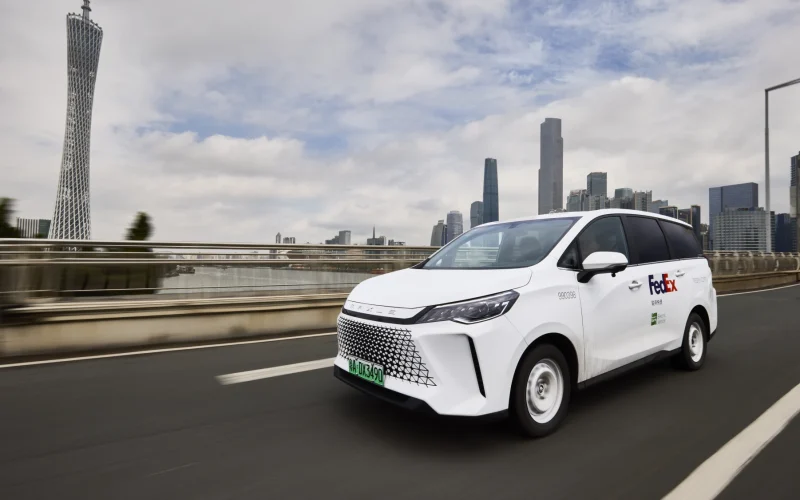
The company highlighted its FedEx Sustainability Insights platform, which provides customers with near-real-time visibility into estimated CO₂e emissions at both shipment and account levels, enabling more informed sustainability decisions. FedEx has also begun using sustainable aviation fuel at Chicago O’Hare and Miami International airports and is expanding the use of electric vehicles for last-mile delivery. Electric vehicles now account for more than 25% of its delivery fleet in China.
FedEx is also rolling out digital trade solutions in China, including FedEx Ship Manager Lite, the Online Declaration Tool and Electronic Trade Documents, to reduce paper use and energy consumption.
As cross-border trade continues to evolve, FedEx said it remains focused on delivering faster, smarter and more sustainable logistics solutions to support customers’ growth while reducing environmental impact.