




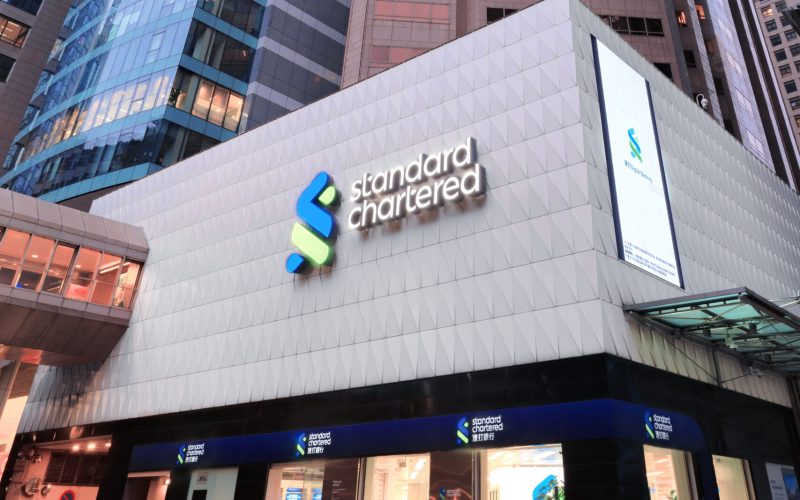
Standard Chartered has published a new report showing strong confidence among Indian companies in the country’s ability to deliver on its net-zero ambitions, underpinned by rising corporate investment in clean energy and emissions reduction.
Titled India and the Energy Transition, the report is based on a survey of 40 Indian businesses and finds that 83% have already put net-zero strategies in place, while 93% are actively investing in emissions-reduction solutions. Almost all respondents (98%) expect their investments in sustainable solutions to increase over the next five years.
Despite this momentum, engagement with sustainable finance remains limited. Fewer than 40% of surveyed corporates have used sustainable finance instruments so far, and only 32% have exposure to carbon credits. However, appetite is growing sharply, with 86% expecting to use sustainable finance solutions in the future and 88% planning to participate in carbon markets.
Green and sustainability-linked bonds and loans emerged as the most preferred financing tools, while companies with water exposure or labour-intensive operations also showed interest in blue bonds and social bonds.
The report estimates that India will need annual investments of up to USD 300 billion to reach net zero, highlighting the scale of corporate funding required. It points to carbon markets as an increasingly important channel for directing capital towards decarbonisation, allowing companies to complement direct emissions cuts with carbon credits.
Beyond emissions reduction, corporates view the transition to renewable energy as central to improving India’s economic resilience and reducing dependence on fossil fuel imports. With electricity demand expected to rise, the report underscores the need for large-scale investment in domestic power generation to strengthen energy security while limiting environmental impact. Transport electrification also features strongly, with 83% of respondents expecting India’s car and motorcycle fleet to be largely electric by 2050.
Ben Daly, Global Head of Transition Finance at Standard Chartered, said the findings point to “tangible momentum” in India’s energy transition, driven by rising electricity demand, growing corporate clean energy investment, and the expanding role of sustainable finance and carbon markets.
Shobana Chawla, Head of Sustainable Finance for India at Standard Chartered, said further progress would depend on scaling up local manufacturing, expanding government support for low-carbon solutions, and enabling the financial sector to offer sustainable finance more widely.
The report notes that while India is the world’s third-largest emitter, its per-capita emissions remain well below those of developed economies, underscoring the need for a balanced transition that supports growth alongside decarbonisation.