







Amazon India is working with IIT Roorkee on a research project to develop biodegradable paper mailers made from agricultural residue, aiming to reduce stubble burning and dependence on plastic and virgin wood pulp packaging.
India generates an estimated 500 million tonnes of agricultural waste annually. Under the 15-month project, crop residues such as wheat straw and sugarcane bagasse will be processed into paper mailers intended to be recyclable and home-compostable. The initiative seeks to reduce the use of virgin wood pulp and offer an alternative to plastic packaging, while creating a potential additional income stream for farmers by monetising agricultural residues.
“At Amazon, we are building and managing India’s fastest, safest, and most reliable operations network, and we’re committed to making it more sustainable. As part of this effort, we’re partnering with IIT Roorkee to develop innovative packaging from crop residue,” said Abhinav Singh, Vice President of Operations at Amazon India.
He added: “India generates nearly 500 million tons of this waste annually, and by repurposing it into packaging, we can support a more circular economy while reducing reliance on conventional materials.”
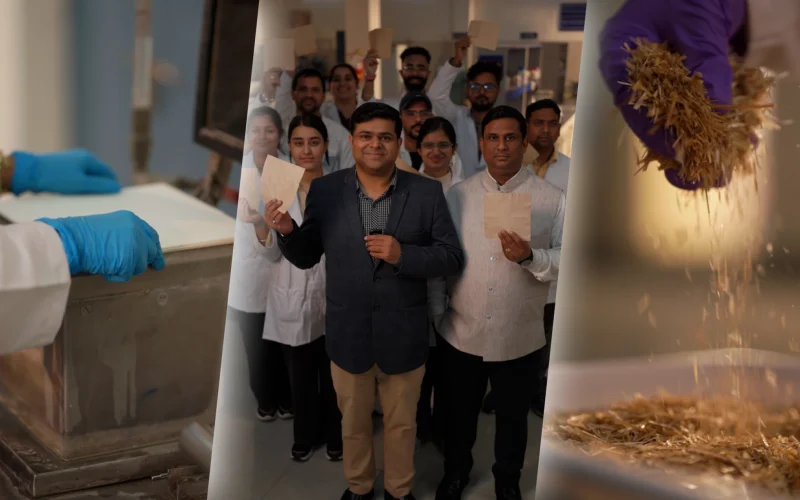
The work is being carried out at the INNOPAP (Innovations in Paper and Packaging) laboratory at IIT Roorkee’s Department of Paper and Packaging Technology. Agricultural residues are first processed in an autoclave digester to produce pulp, which is then washed and screened to remove impurities. The pulp is pressed and dried into paper samples designed to meet durability and recyclability requirements.
The project will begin with lab-scale development and testing. Subject to performance results, the partners plan to move to industrial trials, process validation and potential commercial production by mid to late next year.
Prof. Kamal Kishore Pant, Director of IIT Roorkee, said: “Sustainability is no longer a choice, it is an urgent national priority. This collaboration between IIT Roorkee and Amazon is a step towards realising India’s vision of a circular economy, aligned with government missions such as Swachh Bharat, Startup India and the National Resource Efficiency Policy.”
He added that converting agricultural residues into biodegradable packaging addresses both stubble burning and reliance on virgin materials, while creating solutions that could benefit industry and farmers.
The research is being led by Prof. Vibhore Kumar Rastogi and Dr Anurag Kulshreshtha from the INNOPAP Lab at IIT Roorkee’s Saharanpur campus.
Amazon said the initiative forms part of its broader efforts to reduce packaging and environmental impact across its India operations.