






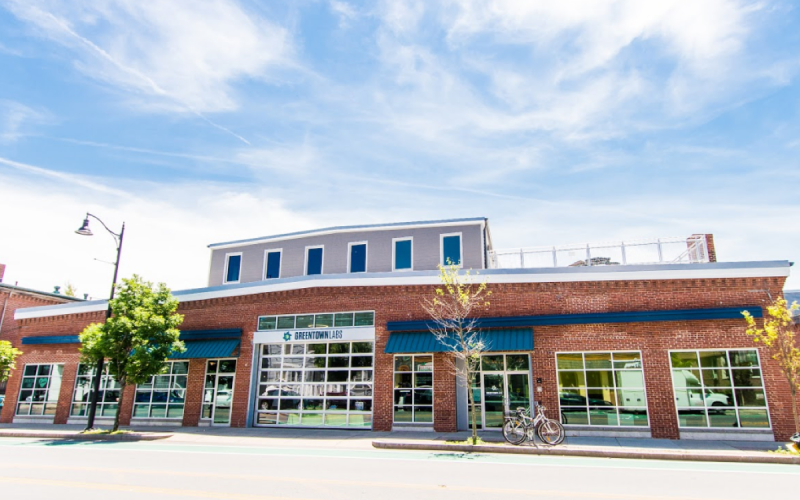
Greentown Labs, a climate tech incubator, has announced the five startups selected for its Greentown Go Build 2026 programme. In partnership with Amazon and the Global CO₂ Initiative (GCI), the initiative aims to scale carbon-mineralisation technologies to decarbonise the global “built environment”.
The construction industry currently accounts for over 35% of global greenhouse gas emissions. To address this, the cohort was narrowed down from 62 applicants across 25 countries to five firms developing “carbon-valorisation” technologies—processes that turn captured CO₂ and industrial waste into sustainable building materials.
The selected participants represent a global push for greener infrastructure:
- Low Carbon Materials (UK): Developing carbon-sequestering additives for concrete and asphalt.
- Carbon Infuse (USA): Upcycling flue gas and industrial waste into low-cost construction materials.
- Carbon Negative Solutions (USA): Converting regional minerals into carbon-negative cement supplements.
- Carbon To Stone (USA): Transforming industrial residues into low-carbon cement and concrete.
- Neocrete (New Zealand): Creating additives that improve the durability and sustainability of cement alternatives.
The startups will collaborate directly with Amazon’s sustainability teams to validate technologies and develop supply-chain strategies. Amazon is targeting net-zero carbon by 2040, a goal that requires decarbonising its vast network of fulfillment centres, offices, and data centres.
“Decarbonising our buildings is a significant part of reaching our Climate Pledge,” said Chris Atkins, Director of Worldwide Operations Sustainability at Amazon. “We know Amazon’s scale gives us the opportunity and responsibility to help drive important industry shifts.”
The Global CO₂ Initiative, based at the University of Michigan, will provide the cohort with life-cycle and techno-economic assessments to ensure their products reach “climatological significance.”
Georgina Campbell Flatter, CEO of Greentown Labs, emphasised that innovation cannot scale in isolation. “Greentown Go Build 2026 will spark collaborations… giving entrepreneurs invaluable access to leaders who can accelerate their paths to deployment,” she noted.