







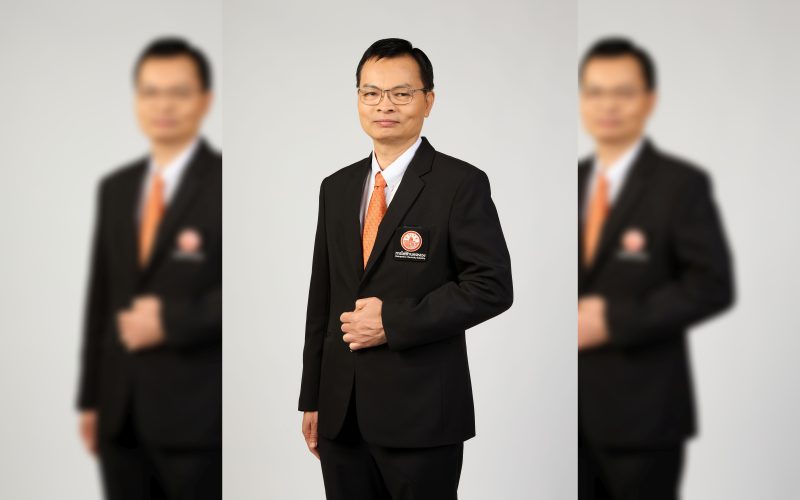
Metropolitan Electricity Authority (MEA) earned the Silver Award for Asia’s Best Stakeholder Reporting at the 11th Asia Sustainability Reporting Awards (ASRA), a recognition that Deputy Governor for Strategy and Sustainability Pisanu Tantitavorn describes as “a proud moment that reaffirms our commitment to transparency, accountability, and continuous improvement.” In this exclusive interview, he discusses MEA’s decade-long evolution from compliance-based disclosure to strategic sustainability reporting, the shift from “reporting sustainably” to “managing sustainably,” and the organisation’s efforts to strengthen governance, enhance stakeholder trust, and drive Thailand’s responsible energy transformation.
Congratulations on winning at the 11th Asia Sustainability Reporting Awards. What does this recognition mean for your sustainability team and your organisation?
Thank you. This recognition is a proud moment for both our sustainability team and the entire MEA organisation. It reaffirms our commitment to transparency, accountability, and continuous improvement in sustainability practices. For our team, it validates years of effort in building a reporting culture that reflects both integrity and impact. For the organisation, it reinforces MEA’s leadership in driving responsible energy transformation in Thailand.
Sustainability reporting has evolved rapidly. How has your reporting approach matured over the past few years, and what were the biggest lessons from this journey?
Our reporting journey has evolved from compliance-focused disclosure to a strategic communication tool that links performance with long-term value creation. Over one decade, we have strengthened data integration, stakeholder inclusiveness, and impact measurement. The biggest lesson learned is that effective sustainability reporting requires cross-functional collaboration and a mindset shift—from “reporting sustainability” to “managing sustainably.”
The ASRA judges emphasise rigour, transparency, and impact. Which parts of your report do you feel best demonstrate these qualities?
Our materiality assessment and stakeholder engagement sections best reflect these principles. They demonstrate how MEA identifies, prioritises, and responds to material sustainability issues with measurable outcomes. The performance dashboards and case studies also show transparency in communicating both achievements and challenges, highlighting our genuine commitment to progress, not perfection.
Could you walk us through the process of materiality assessment — and how you are now integrating double materiality or value-chain impacts into your reporting?
We conduct a comprehensive materiality assessment every year, guided by international standards such as GRI and aligned with Thailand’s national sustainability priorities. Recently, we have begun integrating double materiality, evaluating both how sustainability issues affect MEA and how MEA’s activities impact society and the environment. This includes assessing value-chain impacts such as supplier responsibility, energy efficiency, and community well-being.
How do you ensure data accuracy and credibility across complex topics such as GHG emissions, supply-chain sustainability, and human rights?
We apply a three-layered assurance process—internal verification, management review, and external assurance by independent auditors. We also utilise digital data systems for GHG tracking and sustainability KPIs. In parallel, we conduct staff training to ensure data quality and ethical reporting practices across all business units. Accuracy and credibility are non-negotiable foundations of MEA’s sustainability governance.
What new sustainability frameworks (for example, ISSB or TNFD) are you preparing to align with, and what challenges or opportunities do they bring?
MEA is preparing to align with the ISSB Standards and exploring integration with the Taskforce on Nature-related Financial Disclosures (TNFD). These frameworks present challenges in data granularity and cross-department coordination, but they also provide opportunities for improved risk management and investor confidence. We see alignment as a way to future-proof MEA’s sustainability reporting and enhance our regional leadership position.
Reporting aside, which sustainability initiative or achievement from the past year are you personally most proud of?
I am particularly proud of our Smart Metro Grid Project and our initiatives to promote electric mobility (EV) in Bangkok. These projects directly support Thailand’s carbon neutrality goals while improving service efficiency and urban sustainability. They show how MEA can turn sustainability ambition into tangible public value.
How do you engage internal teams and business units in the sustainability agenda so that reporting reflects genuine performance, not just compliance?
Engagement begins with ownership. We embed sustainability KPIs into each business unit’s operational plans and evaluate performance through a shared accountability framework. Training, workshops, and recognition programs help reinforce understanding. By aligning sustainability with performance incentives and organisational values, we ensure our reporting reflects authentic progress rather than box-ticking.
Many companies are still struggling to link sustainability KPIs with business results. How has your organisation made that connection visible in its strategy and disclosures?
We have linked key sustainability indicators—such as energy efficiency, emissions reduction, and customer satisfaction—to business outcomes including cost savings, risk mitigation, and stakeholder trust. Our integrated reporting approach highlights these interconnections, demonstrating that sustainability performance directly supports MEA’s operational excellence and long-term financial resilience.
Finally, what advice would you give to other sustainability professionals aspiring to reach ASRA-winning standards in their reports?
Focus on authenticity, integration, and continuous improvement. Sustainability reporting is not about showcasing perfection, but about demonstrating progress with integrity. Build strong internal collaboration, engage stakeholders meaningfully, and always use data to tell your impact story. Excellence in reporting follows naturally when sustainability becomes part of your organisation’s DNA.