


British International Investment (BII), the UK’s development finance institution, has committed £308 million ($409 million) in climate finance across South-East Asia during its current strategy period, progressing towards its goal of investing up to £500 million ($665 million) in the region by 2026.
According to BII, its investments to date are expected to deliver more than 1.8 GW of clean energy capacity and avoid over 1.6 million tonnes of greenhouse gas emissions. The institution says these efforts form part of a broader push to support South-East Asia’s transition away from fossil fuels. The region remains highly vulnerable to climate change and continues to rely heavily on coal and natural gas, despite governments setting net-zero targets for 2050.
South-East Asia requires an estimated US$210 billion each year in green infrastructure investment to meet climate commitments — a shortfall that public funding alone cannot bridge. BII said it aims to help close this gap by providing long-term, risk-tolerant capital intended to demonstrate commercial viability and attract wider market participation.
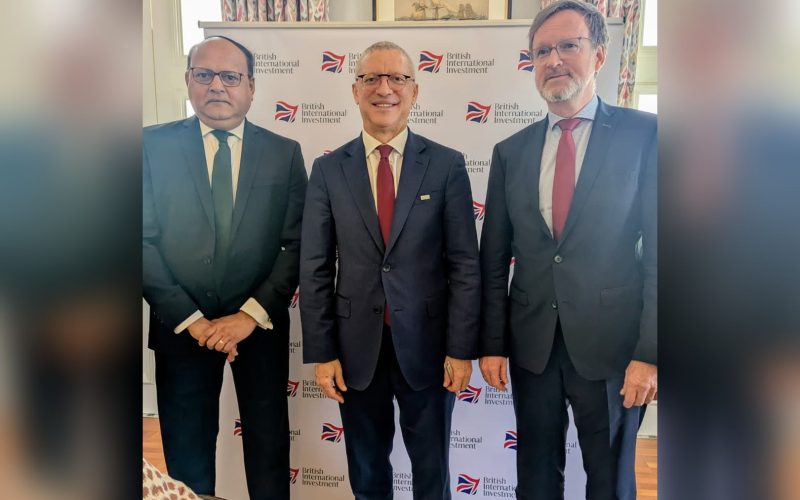
On his first visit to the region since taking office, BII CEO Leslie Maasdorp said: “Our commitment in South-East Asia reflects our ambition to deliver climate finance where it matters most, supporting countries that are highly vulnerable to climate change and driving the transition to clean energy.
“By taking a patient and flexible approach to de-risk projects and demonstrate their viability, we’re helping accelerate the development of bankable projects that are essential for this transition. These investments not only reduce emissions but also create jobs, build resilience, and unlock private capital for sustainable growth.”
BII’s regional portfolio includes investments across funds, equity, debt and specialised renewable platforms. Its first investment upon re-entering South-East Asia was in the SUSI Asia Energy Transition Fund (SAETF), which finances renewable energy, energy efficiency and storage projects and has developed a pipeline exceeding 800 MW of solar and wind capacity.
The institution is also collaborating with FMO and SUSI through the Sustainable Asia Renewable Assets (SARA) platform, which aims to develop 500 MW of greenfield renewable energy projects. SARA recently acquired a 39.4 MW wind project in Vietnam, expected to generate around 110.9 GWh of electricity annually and avoid more than 55,000 tonnes of CO₂.
In equity, BII’s investment in Indonesia-based Xurya is supporting the expansion of rooftop solar, targeting 600 MW of capacity by 2028. In Vietnam, BII’s first direct debt investment, made via VPBank, will be directed towards climate-related projects and small and medium-sized enterprises.
In addition, BII and Pentagreen Capital have jointly committed US$80 million to ib vogt under their Development and Construction Facility to support solar, hybrid solar and battery storage projects in the Philippines, Indonesia and other eligible markets. The 99 MWp Tantangan Solar Power Plant in the Philippines is the first project to receive financing under the scheme. Once operational in 2026, it is expected to generate more than 150 GWh of clean energy annually — enough to power over 82,000 households — and offset more than 66,000 tonnes of CO₂ per year.