








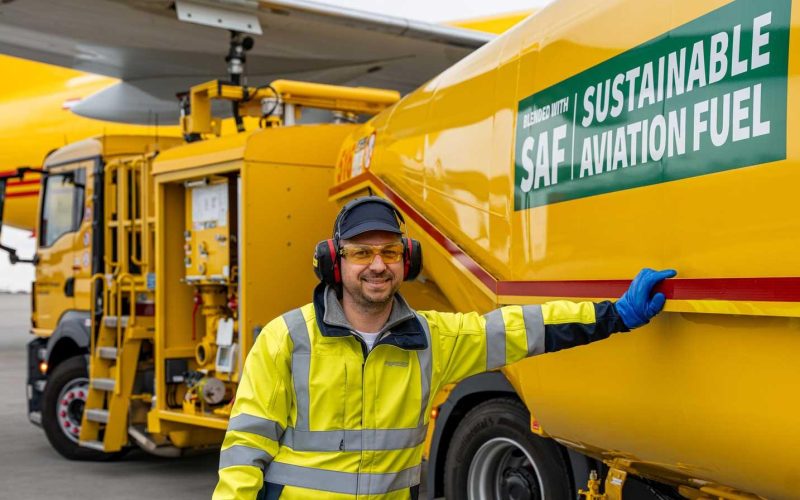
DHL Group advanced several elements of its decarbonisation strategy in 2025, expanding the use of lower-emission fuels, electric vehicles and on-site renewable energy across its operations.
In air freight, DHL extended its use of sustainable aviation fuel (SAF), which it has adopted since 2021. During the year, the group signed a multi-year agreement with Phillips 66 to purchase more than 240,000 metric tonnes of SAF over three years. The fuel, produced in California, is expected to be used primarily in DHL’s West Coast operations and to reduce lifecycle emissions by an estimated 737,000 metric tonnes of CO₂e.
In ocean freight, DHL partnered with CMA CGM to procure 8,800 metric tonnes of UCOME second-generation biofuel. The companies estimate this will cut emissions by around 25,000 metric tonnes of CO₂e on a well-to-wake basis, covering the full lifecycle of fuel emissions.
The group also expanded trials of hydrogen-powered trucks, which are being tested as an option for long-haul transport. In 2025, DHL signed a memorandum of understanding with Hyperview in Saudi Arabia to pilot hydrogen trucks in the Middle East, alongside a feasibility study for hydrogen refuelling infrastructure aligned with Saudi Vision 2030.
In last-mile delivery, DHL continued to scale up electrification, particularly in Germany. The company announced the purchase of 2,400 electric vans from Ford for its Post & Parcel Germany division, with most vehicles delivered and already in operation. DHL said the move would extend zero-emission delivery services to around one-third of German postcodes, supported by a fleet of more than 35,000 electric vehicles, including vans, tricycles and bicycles.
Beyond transport, DHL has also invested in renewable energy at its facilities. In Thailand, the group launched a solar-powered warehouse equipped with a 4.2 MWp solar array and battery storage system, designed to generate all of the site’s electricity on-site and reduce reliance on grid power.
The measures form part of DHL Group’s longer-term plan to reach net-zero greenhouse gas emissions by 2050.