



Envision Energy is set to supply 630 MW of wind turbines and provide 30 years of long-term services to Casa dos Ventos, Brazil’s largest renewable energy developer.
The deal marks Envision Energy’s first net-zero energy deployment in Brazil and establishes a wider strategic partnership between the two companies. Under the agreement, Envision will supply customised 8.x MW onshore wind turbines, among the highest-capacity units deployed in the country to date.
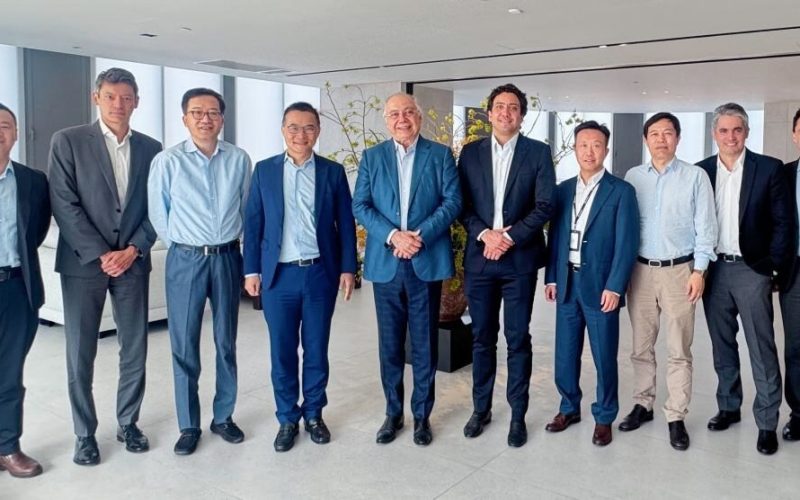
The signing ceremony was attended by Lei Zhang, Chairman of Envision , and Mário Araripe, Founder of Casa dos Ventos.
According to the companies, the turbines will be tailored to local grid conditions and technical standards, drawing on Envision’s experience in large-scale wind projects. Beyond turbine supply and servicing, the partnership may expand to include collaboration on digital asset management, data infrastructure and low-carbon fuels such as green hydrogen and ammonia.
Lucas Araripe, executive director of Casa dos Ventos, said the partnership was based on Envision’s technology and long-term commitment to Brazil. “This collaboration will enable the delivery of large-scale wind projects with reliability and performance, while supporting Brazil’s energy transition and generating socio-economic benefits, including jobs and local development,” he said.
Henry Peng, Senior Vice President and President of Latin America and the European Region at Envision Energy, said Brazil’s energy mix was increasingly reliant on non-hydro renewables such as wind and solar. “Our partnership with Casa dos Ventos goes beyond turbine supply,” he said. “We intend to explore system-level net-zero solutions across wind, energy storage, green hydrogen and other emerging sectors, supporting Brazil’s net-zero transition.”
The agreement follows a series of high-level engagements between the two companies. In May 2025, Lei Zhang met Brazilian President Luiz Inácio Lula da Silva during an official visit to China to discuss renewable energy and net-zero industrial development. Further discussions took place later in 2025 as the companies explored cooperation on clean energy and industrial decarbonisation.
Both firms said the partnership could serve as a model for scaling renewable energy and net-zero technologies across Brazil and the wider Latin American region.