






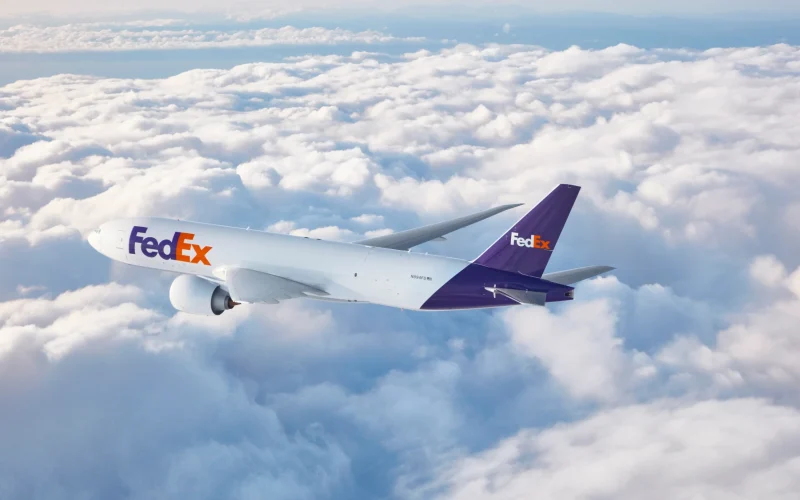
FedEx has introduced sustainable aviation fuel (SAF) at two additional US airports—Dallas Fort Worth International Airport and John F. Kennedy International Airport—towards the end of last year, expanding its SAF operations to five major US airports in 2025.
With the latest additions, FedEx has secured the equivalent of around five million gallons of neat SAF through its US agreements.
“Expanding SAF use by FedEx to include our operations at DFW and JFK caps off a successful year of SAF deployments coast-to-coast,” said Karen Blanks Ellis, Chief Sustainability Officer and Vice President of Environmental Affairs at FedEx. “While we know there remains work ahead to procure more SAF and to continue to educate our stakeholders about how alternative fuels fit into our overall aviation sustainability strategy, we are proud of our steps forward in 2025.”
Under an agreement with fuel provider World Fuel Services, FedEx will receive two million neat gallons of SAF across the two airports, supplied as a minimum 30% blend. Fuel deliveries to DFW began in December 2025, making FedEx the first airline—cargo or passenger—to purchase SAF at the airport outside of a pilot project.
“World Fuel is committed to expanding the availability of SAF and meeting the sustainability needs of our customers,” said Bradley Hurwitz, Senior Vice President, Supply & Trading at World Fuel. “FedEx’s purchase at DFW and JFK demonstrates how our aviation fuel distribution platform enables carriers to access lower-carbon fuel options with a robust supply chain designed for flexibility and scale.”
Robert Horton, Vice President of Environmental Affairs and Sustainability at DFW, said: “FedEx’s SAF purchase reflects how airlines, airports, and fuel providers work together within existing airport infrastructure to support the development of more sustainable aviation operations.”
FedEx said it continues to pursue efficiency measures alongside alternative fuel procurement, including fleet modernisation and fuel-saving initiatives. After achieving a 30% reduction in aircraft emissions intensity from a 2005 baseline in FY24, the company has set a new target of a 40% reduction by 2034.