


Google has entered into a landmark agreement with Commonwealth Sortation LLC, an affiliate of AMP, to remove 200,000 metric tonnes of CO2 by 2030. The partnership leverages AI-powered sortation technology to intercept organic waste before it reaches landfills, preventing the release of methane—a potent greenhouse gas—and converting the material into carbon-sequestering biochar.
Landfilled municipal solid waste (MSW) is currently the third-largest source of human-generated methane in the United States. AMP’s process diverts this waste and transforms it into biochar, a stable substance that locks carbon away for centuries. Google’s investment will allow AMP to expand biochar production at its Virginia facility, with the potential to process five million tons of organic waste over the next two decades.
“We’re excited to catalyse an approach to waste management that takes on the twin challenges of climate change: the near-term warming of methane and the long-term warming of carbon dioxide,” said Randy Spock, Carbon Credits and Removal Lead at Google. He noted that the technology offers a “scalable way to turn waste organic materials into a real climate solution.”
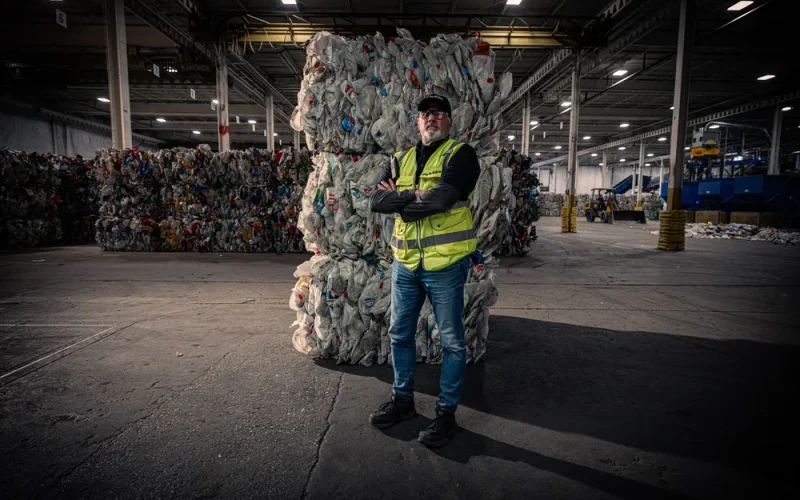
The project, based in South Hampton Roads, Virginia, serves 1.2 million residents. Using AI, the facility will process 540,000 tons of MSW annually, diverting at least 50% of it from landfill. Every ton diverted is estimated to reduce or sequester more than 0.7 tons of CO2, equivalent to removing 88,000 cars from the road each year.
Matanya Horowitz, AMP founder and Chief Technology Officer, stated, “With biochar, we can turn organic waste from a major source of emissions into a durable, carbon-storing asset for municipalities and waste operators.”
The biochar produced will initially be used as landfill cover to filter leachate and suppress odours, with future applications planned for decarbonising the construction and cement industries. Beyond carbon removal, the AI system recovers high-value recyclables, providing low-carbon feedstock for manufacturing and advancing Google’s broader circular economy goals.