







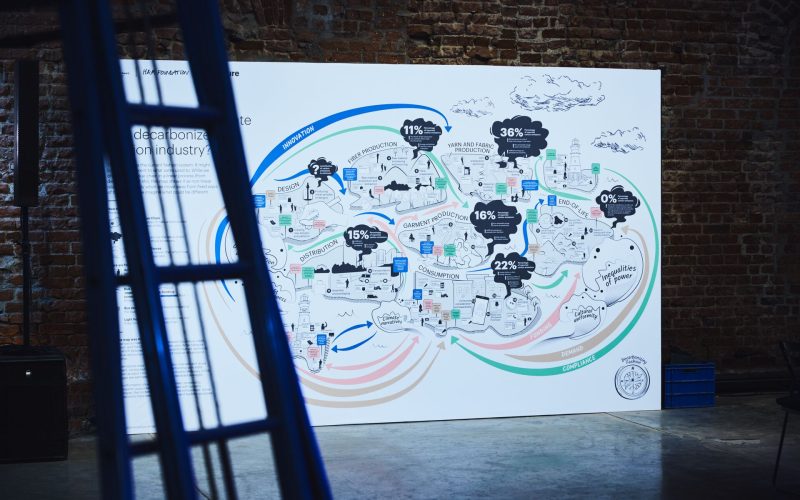
The H&M Foundation has unveiled a practical, open-source toolkit designed to help the textile industry halve its greenhouse gas emissions every decade until 2050. Building on the “System Map” framework introduced in 2024, this new initiative moves beyond theory to provide organisations with a structured method for turning systemic insights into climate action. The toolkit aims to move the industry away from “islands of perfection” and towards a coordinated ecosystem where capital, regulation, and innovation are aligned to trigger large-scale change.
Developed in collaboration with Accenture, the facilitation toolkit is available for both digital and in-person delivery. It features a series of workshops designed to help brands, manufacturers, and policymakers identify their specific spheres of influence and pinpoint systemic leverage points. By mapping the full value chain—from fibre production to end-of-life—the framework visualises carbon emissions alongside systemic forces such as power imbalances and profit-centredness, ensuring that well-intended actions do not simply shift environmental burdens elsewhere.
Anna Gedda, CEO of the H&M Foundation, emphasised the necessity of collective effort in tackling the industry’s carbon footprint. “Change won’t come from islands of perfection – in a system as interconnected as fashion, every part influences the other. The System Map helped make that visible and now this toolkit makes it usable. If we want to halve emissions every decade, we have to stop optimising in silos and start pulling the right levers together,” she stated.
The foundation also stressed that decarbonisation must be coupled with a just transition, ensuring that climate strategies do not place undue financial strain on the most vulnerable parts of the supply chain. By providing a shared view of the system, the H&M Foundation intends to foster a redesign of the industry that is both equitable and sustainable. The System Map and its accompanying toolkit remain publicly available as an open resource for all industry stakeholders.