








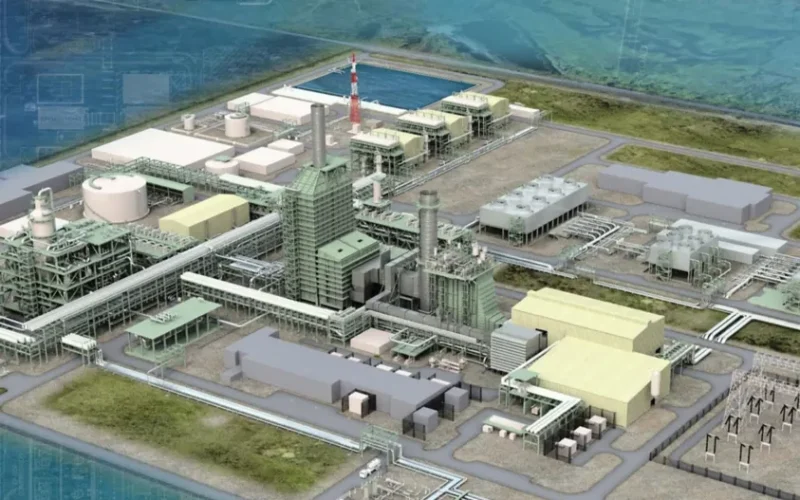
Honeywell has been appointed by Technip Energies to provide automation and safety technologies for two of the UK’s largest planned carbon capture and storage (CCS) developments: the Net Zero Teesside Power (NZT Power) project and the Northern Endurance Partnership (NEP) CO₂ transport and storage system.
Honeywell’s Integrated Control and Safety Systems (ICSS) will be deployed across both projects, forming a unified automation framework that combines process control and safety functions. The systems will support operational reliability across the Teesside power facility and the associated CO₂ transport and storage infrastructure.
The NZT Power project is designed to become the world’s first gas-fired power station with carbon capture capability. Once operating, it is expected to generate more than 740 MW of dispatchable low-carbon electricity – sufficient to power over one million UK homes – while capturing up to two million tonnes of CO₂ annually. The captured CO₂ will be transferred to the NEP network for offshore storage.
The NEP infrastructure will transport CO₂ from multiple industrial and power projects across Teesside and the Humber as part of the East Coast Cluster, with storage planned in a saline aquifer beneath the North Sea. Honeywell’s systems will interface with both the onshore pipeline network and offshore storage operations.
Menzo Bijmolen, vice president and general manager for Honeywell’s EMEA Industrial Automation Projects & Automation Solutions business, said the technology integration would be central to ensuring safe and efficient operation: “To deploy innovative carbon capture at scale, it is crucial to have automation technologies in place that deliver both operational excellence and safety.”
Technip Energies, in consortium with GE Vernova and construction partner Balfour Beatty, is delivering the engineering, procurement and construction contracts for both the NZT Power and NEP projects. The developments form a key part of the UK’s national decarbonisation strategy and are intended to serve as models for future CCS infrastructure.