


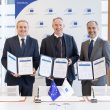

Swedish Bank SEB acted as lead manager for a 750 million Swedish kronor (USD 71 million) sustainable development bond issued by the International Fund for Agricultural Development (IFAD). The bond was placed privately with Skandia, Tredje AP-fonden (AP3) and Kammarkollegiet. It marks the third IFAD transaction arranged by SEB.
Under its Sustainable Development Finance Framework, IFAD raises capital for projects aimed at improving food security, climate resilience and livelihoods in rural communities in low-income countries.
Ben Powell, Head of SSA in Fixed Income at SEB, said: “This recent issuance demonstrates again how IFAD is successfully connecting with Nordic sustainable capital to direct funding to rural communities in the world’s poorest countries and deliver significant development impact.”
He added that SEB has now supported IFAD on three transactions, reflecting continued cooperation to expand investment in smallholder farmers and climate-resilient food systems.
IFAD’s framework aligns with the International Capital Market Association (ICMA) Sustainability Bond Guidelines and is structured around four pillars: defined use of proceeds, project selection, management of funds and annual impact reporting.
Projects financed under the framework include support for youth and women entrepreneurs in Nigeria’s Niger Delta through vocational training, access to finance and market linkages. In India, programmes promote climate-resilient rural enterprises and value chains, while in Lesotho investments focus on irrigation, agricultural inputs and extension services to help farmers adapt to changing weather patterns.
Skandia manages long-term pension and insurance savings in Sweden. AP3 oversees part of Sweden’s public pension capital, and Kammarkollegiet manages investments on behalf of Swedish public authorities and foundations.