


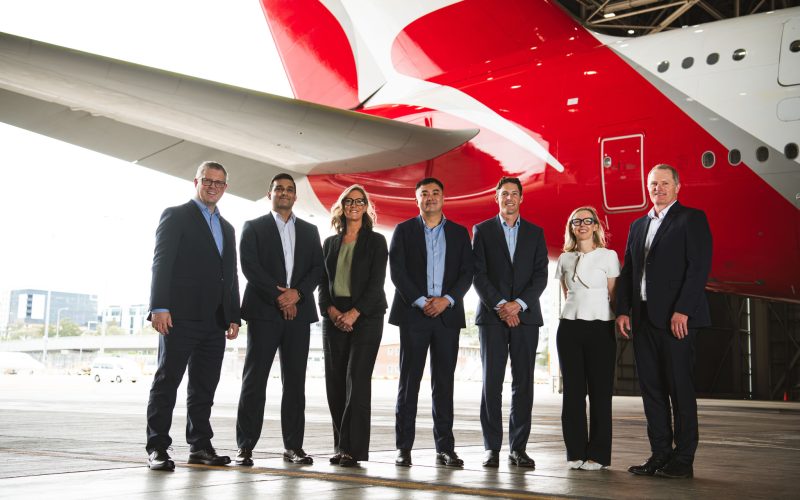
Qantas and Airbus have announced a major investment in a low-carbon and sustainable aviation fuel (SAF) project in Victoria, Portland, backing efforts to scale up domestic production of cleaner aviation fuels.
The funding supports low-carbon fuel developer HAMR Energy and its Portland Renewable Fuels (PRF) project, which aims to convert plantation forestry residues into more than 300,000 tonnes of low-carbon methanol. The methanol will then be processed into SAF at what is planned to be Australia’s first methanol-to-fuel facility, with an expected annual output of more than 130 million litres.
Fiona Messent, Chief Sustainability Officer at Qantas Group, said building a domestic SAF supply chain was critical to meeting aviation decarbonisation targets. She cited research commissioned by Qantas and Airbus projecting SAF demand could exceed 500 million tonnes by 2050, generating more than A$13bn in gross value and supporting around 70,000 jobs across Australia.
“Beyond reducing aviation emissions, a domestic SAF sector would drive regional investment, job creation and broader economic growth,” Messent said.
Stephen Forshaw, Chief Representative for Airbus in Australia, New Zealand and the Pacific, described HAMR Energy’s methanol-to-SAF pathway as a promising technology route to accelerate the sector’s transition to sustainable fuels. Expanding low-carbon fuel production across more Australian states could also improve access for industry offtakers nationwide, he added.
Other investors in HAMR Energy include OneFortyOne and ThyssenKrupp. Also, Honeywell will provide its UOP eFining™ process technology and expertise to enable renewable fuel production from methanol – a major breakthrough for the aviation industry.
David Stribley, co-founder of HAMR Energy, said the latest funding round marked a significant step for the company and for Australia’s clean energy ambitions. “With backing from world-class partners, we are progressing projects aimed at delivering low-cost, low-carbon fuels to decarbonise aviation and shipping at scale,” he said.
The investment from Qantas and Airbus was made through the Australian Sustainable Aviation Fuel investment fund.