





RWE has received the official green light to proceed with the second phase of its 1.6-gigawatt Nordseecluster project in the German North Sea. The German Federal Maritime and Hydrographic Agency (BSH) granted planning permission for “Nordseecluster B” in late March, clearling the way for the construction of two additional wind farms, NC 3 and NC 4.
The approval marks a significant milestone for the German energy giant as it expands its domestic offshore footprint. Tobias Keitel, Chief Technology Officer at RWE Offshore Wind, welcomed the decision, stating, “Now that the BSH has granted approval for Nordseecluster B, we can begin construction at sea next year. Our portfolio already includes six offshore wind farms located off the German coasts. With the Nordseecluster, we are continuing to drive forward the expansion of offshore wind energy. This is a positive development for both the energy transition in Germany and for RWE.”
The cluster is situated approximately 46 kilometres north of Borkum and 50 kilometres north of Juist. The project is being delivered in two distinct stages:
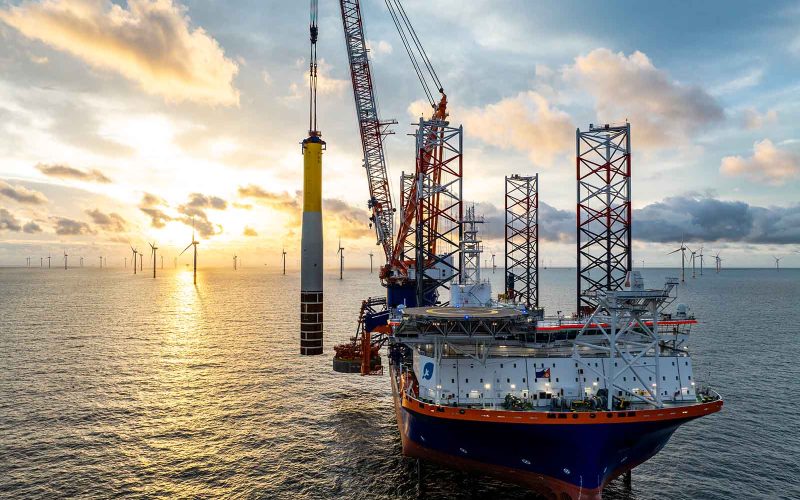
- Nordseecluster A: Currently under construction with a 660-megawatt (MW) capacity. All foundations are in place, and the installation of 44 turbines is scheduled to commence this summer, with full grid connection expected by early 2027.
- Nordseecluster B: The newly approved phase will add 900 MW of capacity. Component production is already underway, with foundation installation set for 2025 and the erection of 60 turbines in 2028. Commercial operations are slated for early 2029.
Once fully operational, the combined cluster will generate approximately 6.5 terawatt hours of renewable electricity annually. RWE intends to utilise this output to provide tailored decarbonisation solutions for industrial clients. High-profile partners already include Amazon, which recently secured a Power Purchase Agreement for 110 MW of the capacity generated by the second phase.
The Nordseecluster is a joint venture between RWE, which holds a 51% stake, and Norges Bank Investment Management, which holds 49%. RWE remains responsible for the construction and long-term operation of the facilities throughout their life cycle.