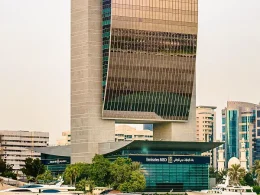





Standard Chartered has issued its inaugural green bond, raising €1 billion ($1.2 billion) to finance a range of environmental projects, including renewable energy, green buildings and circular economy initiatives.
The transaction marks the bank’s fifth sustainable finance issuance and its first dedicated green bond. Proceeds will be allocated in line with Standard Chartered’s Sustainability Bond Framework, including to projects focused on climate-resilient infrastructure, energy efficiency, sustainable water management and natural resource solutions.
Diego De Giorgi, Group Chief Financial Officer, said the issuance reflected the bank’s role in channelling capital across regions. “Our first Sustainable Finance issuance in a green-only format is an important milestone and demonstrates Standard Chartered’s ability to raise capital in major financial centres and deploy it across borders, into markets where the need for sustainable finance is most acute,” he said.
Marisa Drew, Chief Sustainability Officer, said the impact of green finance could be particularly significant in emerging markets. “In emerging markets, every dollar of financing can have a disproportionate impact in terms of reducing carbon emissions,” she said, citing renewable energy investments in Indonesia that displace more carbon-intensive power generation.
The bank said the green bond references its sustainable finance asset pool, which includes $17.4 billion in green assets across 355 projects, with more than 70% located in Asia, Africa and the Middle East.
Dan Hodge, Group Treasurer, said investor demand was strong, with order books peaking above €3.9 billion. “Investors in our Sustainable Finance offering continue to benefit from exposure to a UK-regulated bank, while the impact delivered through our products takes place in high-growth developing markets,” he said.
Salman Ansari, Global Head of Capital Markets, said the bond was priced on what he described as the busiest day on record for euro investment-grade credit markets. “The €1 billion offering priced flat to the issuer’s secondary curve, reflecting investor demand,” he said.
According to Standard Chartered’s 2024 Sustainable Finance Impact Report, green asset financing over the past year included flood resilience infrastructure in Ghana, support for electric bus deployment in India, and financing for Türkiye’s second-largest solar power project.
The bank’s Sustainability Bond Framework carries a second-party opinion from Sustainalytics. In September 2024, Standard Chartered reported $23.3 billion in total sustainable finance assets, with 78% located in Asia, Africa and the Middle East.