



At a time when energy utilities across Asia are navigating the urgent demands of climate action, digital transformation and stakeholder expectations, Thailand’s Provincial Electricity Authority (PEA) has emerged as a standout leader. Fresh from winning the Platinum Award for Asia’s Best Stakeholder Reporting at the 11th Asia Sustainability Reporting Awards (ASRA), PEA is demonstrating how a state enterprise can embed sustainability not as an add-on, but as the very foundation of its long-term strategy.
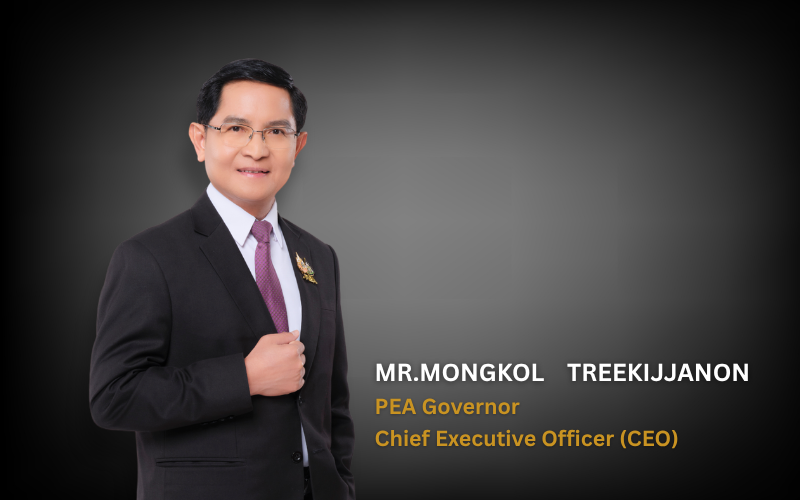
In this exclusive conversation, PEA Governor and CEO Mongkol Treekijjanon reflects on the organisation’s sustainability journey — from integrating Double Materiality into core decision-making, to driving Thailand’s national energy transition through smart grid investments, energy equity, and a future-ready workforce.
Congratulations on your company’s success at the Asia Sustainability Reporting Awards. What does this achievement signify from a leadership perspective?
On behalf of the PEA, we would like to give our appreciation again for recognising PEA in the Asia Sustainability Reporting Awards, or ASRA. The Platinum Award for Asia’s Best Stakeholder Reporting is incredibly meaningful to a dedication devoted to sustainability. From a leadership perspective, this achievement is a powerful validation of our sustainability direction. It signifies our commitment to place stakeholders at the core of our decision-making, not just an internal process, but a verifiable standard of excellence in reporting, aligned with AA1000SES principles.
The award confirms that our effort has been successfully translated into shared value and an entrustment with the communities we serve. It reflects a culture where we actively listen to our stakeholders, building trust, and ensuring that all expectations and perspectives directly shape our policies and drive positive outcomes for the national energy transition. This recognition is a clear mandate to continue upholding the highest standards of accountability and responsiveness.
How does sustainability fit within your overall business strategy and long-term value-creation goals?
Sustainability is fully integrated as the fundamental foundation of our business strategy and the primary driver of our long-term value creation. We see sustainability as the viable strategy for a modern energy utility. Our vision, ‘Smart Energy for Better Life and Sustainability,’ is embedded in the core business by focusing on how we are actually building a Smart Energy System that can be accessed from every corner of Thailand. This is our value driver, delivered through our ESG framework:
- Environmental Value: We have committed towards Carbon Neutrality and Net Zero emissions, including major investments in Grid Modernisation and Digitalisation to support the massive integration of clean, renewable energy, thereby mitigating climate risk and creating long-term environmental value.
- Social Value: We have utilised a Double Materiality approach to create Shared Value. This ensures stakeholder voices are actively inputted to shape our policies and that the energy transition — including the expansion of electricity access and EV infrastructure — is just and equitable for all communities we serve.
- Governance Value: For Future-Proofing the Business, Sustainability ensures robust corporate governance by mandating transparency, accountability, and the proactive management of long-term risks. This disciplined approach guarantees operational resilience, reliable service delivery, and secures our long-term financial stability.
In short, sustainability is how we ensure reliable service, manage future risks, and guarantee long-term financial stability by creating value for both our stakeholders and the entire society we serve.
What role do you personally play in setting and steering the sustainability agenda within the company?
My personal involvement is strategic and focused on setting the tone from the executive level and driving the comprehensive organisational transformation, ensuring that sustainability is the foundation of our work, not just separated initiatives. This begins by establishing the strategic mandate, guaranteeing that the perspectives and the findings from our Double Materiality assessment are structurally embedded in our core business and capital decisions — from Grid Modernisation to becoming a Smart Energy Solution. And finally, I act as the chief accountability officer, reinforcing robust governance to link ESG outcomes directly to executive performance. This ensures execution and continuously strengthens the transparency and trust of all stakeholders.
Many CEOs now see sustainability as a competitive advantage. How has it shaped innovation, market growth, or stakeholder trust for your organisation?
It is the new competitive frontier that is fundamentally reshaping our business and enhancing our organisational value. For us, sustainability is the primary driver behind innovation, market expansion, and enhanced organisational value.
- Innovation: This mandates investments in Grid Modernisation and Digitalisation to manage massive renewable integration. This enhances operational resilience and allows us to pioneer cutting-edge solutions like Microgrids.
- Growth: We are leading the Energy Transition market. By building the essential infrastructure for Electric Vehicles (EVs) and developing high-value Smart Energy Solutions, we secure new revenue streams and strategically expand our business into new high-growth sectors.
- Trust: Our comprehensive ESG framework and use of Double Materiality ensure transparent, stakeholder-driven decision-making. This integrity, as demonstrated by our high stakeholder engagement score, secures the trust and long-term confidence of all stakeholders.
Why do you believe sustainability reporting is vital for corporate leadership today?
Sustainability reporting is no longer optional; for modern corporate leadership, it is a mandatory strategic tool providing the foundation for decision-making and organisational integrity. I believe it functions simultaneously as the organisation’s ultimate risk management tool and the public document of our accountability to all stakeholders. By mandating the Double Materiality approach, the report ensures we identify, quantify, and act on future risks — such as climate change or social impacts — that traditional financial reports often miss, making our strategies measurable and sound.
This transparency directly assures public finance institutions and cooperation partners of our long-term financial stability and the efficient use of public funds, which is critical for unlocking mechanisms like Green Bonds for essential Energy Transition projects. Ultimately, the sustainability report is the definitive output of our commitment to accountability, ensuring that the outcomes of our stakeholder engagement are documented, measured, and available for public scrutiny to maintain trust.
How do you ensure that sustainability performance remains a board-level priority amid other business pressures?
My approach to ensuring sustainability remains a board-level priority is to embed the ESG framework directly into our core governance and financial mechanisms. This shifts sustainability from being a separate ethical concern to being an indispensable measure of organisational competence. Sustainability is not delegated solely to a working group. The Board of Directors, often through a dedicated committee such as the Corporate Governance and Sustainable Development Committee, is required to review and approve materiality identified via the Double Materiality assessment.
This ensures that every strategic investment is first vetted against its contribution to our goals and the national Energy Transition Target. This process leverages sustainability as a non-negotiable input to the organisation’s strategy.
Could you share an example of a major decision or investment where sustainability considerations played a decisive role?
The most decisive investment where sustainability was the primary factor — overriding traditional short-term financial metrics — is our multi-year commitment to Grid Modernisation and Digitalisation. This is the single largest capital allocation in our strategic plan. The decision to invest heavily in transforming our grid was not driven by conventional accounting; it was driven by our Double Materiality assessment, which identified two core risks:
- Climate Risk (Environmental): Our commitment to Carbon Neutrality requires integrating massive amounts of intermittent renewable energy. Our legacy grid is not able to manage the two-way power flow and volatility of decentralised sources. The investment in a Smart Grid was mandatory to meet this environmental goal and ensure system stability.
- Energy Equity (Social): We have a national mandate to provide electricity access and resilience to all communities. Climate change is increasing the frequency of severe weather events, making our conventional system unreliable in remote areas.
The financial calculus only became viable when we weighted the cost against the long-term value creation of climate resilience and a stable platform for the nation’s Energy Transition.
As regulatory frameworks such as ISSB gain traction, how do you view their impact on Asian businesses?
The impact on Asian businesses is signalling a mandatory shift from voluntary, fragmented disclosures to a globally unified standard, which is critical because it has forced companies to escalate sustainability — specifically climate-related risks and opportunities — to the same rigour as financial accounting. For a state enterprise like us, this means that adoption — a trend already seen in major Asian financial hubs — ensures our performance data is instantly credible and comparable to international lenders and cooperation partners, significantly de-risking us as a target for green finance and technology transfer.
By centring on financial materiality, ISSB reinforces the strategic necessity of investments like Grid Modernisation to secure long-term value, compelling the Board to integrate robust data collection, governance, and assurance processes, thereby raising the overall standard of corporate integrity and securing national trust.
Looking ahead, what are your top three sustainability priorities for the next three years?
Our top three sustainability priorities for the next three years are focused on embedding a sustainability culture within PEA, ensuring that our people, innovation, and collaboration drive our transformation into a Smart Energy Solutions provider for the national Energy Transition.
- People: Cultivating the Future-Ready Workforce
The foundation is our people: to instil a culture of sustainability and digital competence across all 30,000+ employees. We have been integrating sustainability targets into all departments and divisions, not just for executives. This ensures every employee understands their role in driving energy equity and climate resilience, supported by mandatory training in digital and sustainability literacy. - Innovation: Execution of Smart Grid Technology
Innovation must be directed towards executing the core technological transformation required for our mandate: securing a resilient grid capable of handling massive renewable energy integration. We have prioritised our investments in Smart Metering and the Advanced Distribution Management System (ADMS) to enhance operational efficiency. This ensures our grid becomes the intelligent platform necessary for the national Energy Transition Target. - Collaboration: Securing the Just Transition Mandate
Collaboration is essential for securing our mandate as a state enterprise, ensuring that our strategic goals benefit all 22 million households we are serving. Our focus is on the National Microgrid Strategy deployment, transforming pilot programmes into scalable solutions for critical and remote areas via collaboration with local communities and technology partners. This ensures a Just Transition that provides reliable, resilient energy access, protecting the most vulnerable communities from climate risk.
What message would you like to send to your peers and the wider business community about responsible leadership in this decisive decade for climate and sustainability?
To my peers and the wider business community: In this decisive decade, responsible leadership is no longer about balancing profit with purpose; it is about recognising that purpose is the next frontier of profit and long-term viability. The era of sustainability as a side project or a pure cost centre is over. It is now a mandatory strategic input — a governance and financial imperative that defines organisational competence.
ESG must not be treated as a CSR function. Embed the sustainability framework — via tools like the Double Materiality assessment — directly into the Board-level strategy and financial controls. If it’s not a non-negotiable input to your capital allocation decisions, you are managing for the short term and courting systemic risk.
In short, act like the future is already here. The market, regulators, and society are converging on one truth: responsible execution is the only long-term roadmap to resilience and value creation.