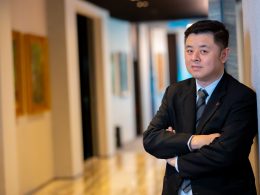






Metropolitan Electricity Authority (MEA) earned the Silver Award for Asia’s Best Stakeholder Reporting at the 11th Asia Sustainability Reporting Awards (ASRA), a recognition Governor Wilas Chaloeysat describes as proof that “transparency, accountability, and stakeholder trust are not just ideals but tangible outcomes of our strategic direction.” In this exclusive interview, he shares how MEA is embedding sustainability into its organisational culture, driving innovation through its Triple Go for Goal strategy, and preparing the metropolis for a low-carbon, smart-energy future.
Congratulations on your company’s success at the Asia Sustainability Reporting Awards. What does this achievement signify from a leadership perspective?
Thank you. This recognition reflects our collective commitment to embedding sustainability at the heart of MEA’s operations. From a leadership perspective, it signifies that transparency, accountability, and stakeholder trust are not just ideals but tangible outcomes of our strategic direction. It also reinforces our belief that sustainability-driven leadership is essential for long-term business resilience and public value.
How does sustainability fit within your overall business strategy and long-term value-creation goals?
The Metropolitan Electricity Authority (MEA) is building an organisational culture that serves as a fundamental basis for its continuous and sustainable development, growth, and success. This is achieved through good governance principles, ensuring that the board of directors, management, and employees work ethically and efficiently to achieve the organisation’s mission and business goals with transparency, responsibility towards society and the environment, and consideration for all stakeholders. MEA respects human rights and emphasises the prevention and eradication of all forms of corruption in line with its good governance policy.
In addition to cultivating a culture of good governance, MEA focuses on strategic workforce planning. This includes capacity development through the organisation’s Training Roadmap (TRM) and Individual Development Plans (IDP). MEA implements talent management plans to prepare quality personnel and succession plans for both management and key operational positions, ensuring continuity in crucial roles. This also involves developing future leaders to ensure that high-potential employees are well-prepared to step into managerial or critical positions effectively. These efforts are aimed at ensuring MEA remains a progressive organisation ready to transition into the digital era successfully and sustainably.
What role do you personally play in setting and steering the sustainability agenda within the company?
As the Governor, I have set the organisation’s vision, including : energy for city life, energise smart living. And Mission is to innovate and operate smart energy system to empower city life for smart living.
To realise this vision, I have adopted the Triple Go for Goal strategy, comprising Go Smart, Go Digital, and Go Green, in alignment with its Strategic Plan’s objectives:
Go Smart, aligning with Strategic Objective No. 1, focuses on enhancing the power distribution system’s efficiency and structure to improve reliability. It also supports Strategic Objective No. 3 by optimising core business operations and expanding into related areas, contributing to sustainable development goals (SDGs) such as urban development (SDG 11) and responsible consumption and production (SDGs 12 and 13).
Go Digital, in line with Strategic Objective No. 2, aims to achieve service and customer management excellence by integrating digital technology into service processes. This initiative supports SDGs related to affordable and clean energy (SDG 7) and industry, innovation, and infrastructure (SDG 9).
Go Green, aligned with Strategic Objective No. 4, focuses on building sustainability through stakeholder care and technological innovation. It involves human capital development to prepare for future business operations while contributing to SDGs related to responsible consumption and production (SDG 12) and climate action (SDG 13).
Through these strategic initiatives, MEA demonstrates its commitment to serving metropolis while advancing sustainable development goals and creating value through innovation and stakeholder engagement.
Many CEOs now see sustainability as a competitive advantage. How has it shaped innovation, market growth, or stakeholder trust for your organisation?
Sustainability has become a catalyst for innovation at MEA. It has inspired the development of smart grid technologies, electric vehicle infrastructure, and renewable energy integration. These initiatives not only enhance operational efficiency but also strengthen public trust and position MEA as a forward-looking public utility that supports Thailand’s low-carbon future.
Why do you believe sustainability reporting is vital for corporate leadership today?
Sustainability reporting promotes transparency and accountability, which are fundamental to responsible leadership. It allows us to communicate our performance, challenges, and progress in a credible and structured way. Moreover, it provides data-driven insights that guide better decision-making and reinforce stakeholder confidence in how we manage environmental, social, and governance (ESG) impacts.
How do you ensure that sustainability performance remains a board-level priority amid other business pressures?
We have embedded sustainability metrics into our corporate performance evaluation and risk management frameworks. Regular board reviews of ESG outcomes ensure that sustainability remains central to decision-making. By linking sustainability goals with operational efficiency and business risk mitigation, we make it clear that sustainability is not an optional agenda—it is essential to long-term competitiveness and public trust.
Could you share an example of a major decision or investment where sustainability considerations played a decisive role?
To achieve its Planet Goal, MEA introduced and further developed the “PLUG ME EV” innovation, a system designed to control the operation of EV charging connectors within a station—managing up to 32 chargers from a single device. The first installation was deployed inside the parking building of the Metropolitan Electricity Authority’s Ploenchit Office. This initiative supports the use of EVs within MEA and will be expanded to serve the general public in the future. It represents a significant advancement in strengthening the electric vehicle ecosystem of the metropolis.
MEA has consistently promoted the development of the EV ecosystem across Bangkok, Nonthaburi and Samut Prakan. With EV numbers expected to exceed 6.6 million vehicles by 2037, the launch of PLUG ME EV marks an important milestone. The innovation enables the installation of charging stations in office buildings, condominiums and other facilities where space or electrical capacity is limited. Because a single compact PLUG ME EV device can connect and control up to 32 AC charger heads, operators can significantly reduce procurement and installation costs.
More than 40% of communication devices are already compatible with the MEA EV Application. PLUG ME EV also integrates with MEA’s energy management system for charging stations (MEA OSCP), helping reduce overall power demand when multiple chargers are used simultaneously. This lowers operators’ demand charges while still ensuring each EV receives the required amount of electricity by the end of the charging period.
At MEA’s Ploenchit Office, PLUG ME EV also supports cross-network services (EV roaming) with partner charging station operators. Pilot cross-network services were scheduled to begin by the end of 2023, with full partner-network availability expected by the end of 2024.
MEA has already completed the first phase of the PLUG ME EV project, which includes 12 charging bays using portable EV chargers (Mode 2, 3.7 kW). The next phase will introduce standard AC Type 2 connectors (7.4–44 kW) across an additional 18 parking slots. All charging services can be conveniently accessed through the MEA EV Application.
As part of MEA’s broader goal to drive the EV ecosystem and promote a low-carbon society, the MEA EV Application continues to evolve to enhance user convenience. It provides information from multiple service providers, allows users to search for charging stations and supports various forms of payment. MEA also plans to expand the number of charging stations across MEA offices and public areas, with a target of at least 600 chargers by 2027.
As regulatory frameworks such as ISSB gain traction, how do you view their impact on Asian businesses?
The adoption of global frameworks like the ISSB will elevate the quality and comparability of sustainability disclosures across Asia. While it may pose initial challenges, especially for data integration and assurance, it will ultimately enhance investor confidence and regional competitiveness. For MEA, it supports our vision to align with international best practices and demonstrate leadership in transparent Sustainability reporting.
Looking ahead, what are your top three sustainability priorities for the next three years?
MEA’s medium-term sustainability goals outline a transformative pathway for the organisation as it prepares for the future of urban electricity management. By 2037, MEA will launch Smart Metro Grid Gen 2, a next-generation project designed to significantly enhance the quality, safety and resilience of the electricity distribution system. A key component of this effort is the completion of Phase 3 of the underground cable project in major economic zones, strengthening infrastructure reliability and reducing system vulnerabilities. In parallel, MEA is committed to reducing its greenhouse gas emissions by 25% from the 2022 baseline, equivalent to 9,262 tonnes of CO₂e, reinforcing its dedication to climate action.
Looking further ahead, MEA has set ambitious long-term sustainability goals that align with Thailand’s national climate commitments. By 2050, the organisation aims to achieve carbon neutrality, marking a major milestone in its decarbonisation journey. MEA plans to build on this progress to reach Net Zero greenhouse gas emissions by 2065, demonstrating its long-term vision for a cleaner, more resilient and sustainable energy future.
What message would you like to send to your peers and the wider business community about responsible leadership in this decisive decade for climate and sustainability?
In 2023, the World Meteorological Organization (WMO) reported the highest global temperatures on record and a strong upward trend, with projections exceeding 1.5 degrees Celsius from the pre-industrial revolution era in the coming years. This was a significant topic at COP 28. Including calling for an agreement for all countries to reduce fossil fuels usage to reduce the impact on climate change, which is a continuing issue from the COP 27 that emphasises cooperation in reducing greenhouse gas emissions. Thailand has announced its commitment to reaching carbon neutrality by the year 2050 and Achieve net zero greenhouse gas emissions by 2065. This will lead to changes in the energy industry (Energy Transition) and pose significant challenges in managing the organisation under such circumstances.
MEA highly values this change, aiming to align operations with the government’s energy policy and the new metropolitan lifestyle, under the vision “Energy for city life, Energise smart living”. We aim to create a stable, reliable, and intelligent electrical power distribution system while improving our service level with modern technology and a focus on environmental care. Our goal is to become a Sustainable Energy Utility, promoting sustainability in energy for the future.