







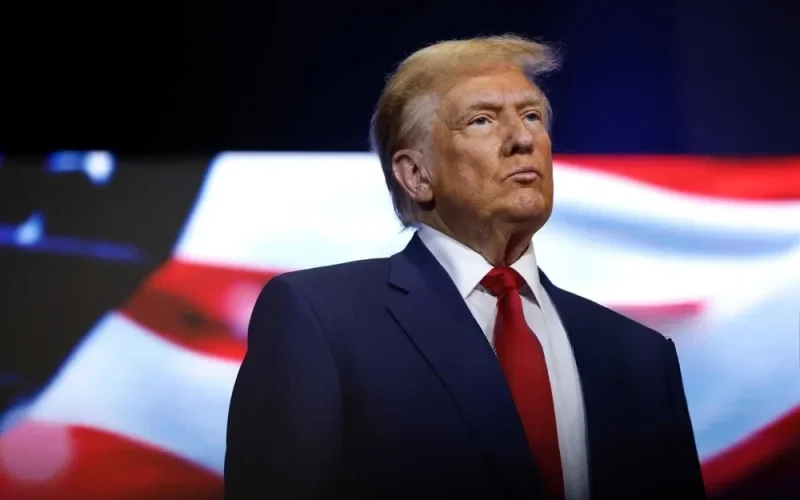
President Donald Trump has set out plans to sharply weaken U.S. fuel economy rules, seeking to reverse standards finalised under former President Joe Biden and ease compliance for automakers selling petrol-powered vehicles. Trump said the proposal reflected consumer preference, stating: “People want the gasoline car.”
The National Highway Traffic Safety Administration (NHTSA) has proposed reducing fuel efficiency requirements for model years 2022–2031, targeting an average of 34.5 miles per gallon by 2031—far below the 50.4 mpg level set under Biden. The agency also intends to revise down standards already in place for 2022 and introduce only modest annual increases of 0.25% to 0.5% through 2031. Under Biden, standards were rising by 8% annually for 2024–25 and 10% in 2026.
NHTSA estimates the weaker rule would cut upfront vehicle costs by an average of $930 but increase fuel use by around 100 billion gallons through 2050. The shift would raise fuel spending by up to $185 billion and generate roughly 5% more carbon dioxide emissions compared with the Biden-era rule. The agency said automakers would save around $35 billion in compliance costs through 2031, including major reductions for General Motors, Ford and Stellantis.
The proposal also includes structural reforms to the programme, including ending credit trading between manufacturers from 2028 and scrapping some credits for fuel-saving technologies. NHTSA said credit trading had disproportionately benefited electric-vehicle makers such as Tesla and Rivian.
California Governor Gavin Newsom criticised the plan, saying it would “force Americans to spend billions more at the pump while poisoning the air in our communities.” Transportation is the largest source of U.S. greenhouse-gas emissions, and the agency projected the emissions increase in 2035 alone would equal the annual output of 7.7 million vehicles compared with Biden’s rule.
Trump announced the proposal alongside the chief executives of Ford and Stellantis. Ford CEO Jim Farley said the company would prioritise more affordable models, calling the move “a victory for common sense and affordability.” Trump claimed vehicle prices were falling, though industry data shows new car prices have risen modestly year-on-year, with the average price passing $50,000 for the first time in October.
General Motors CEO Mary Barra warned earlier this week that state-level zero-emission requirements—before they were blocked by Congress—would have forced automakers to scale back production of petrol models sharply. Biden’s original standards, according to government analysis, were expected to reduce fuel consumption by 64 billion gallons and emissions by 659 million metric tonnes, delivering net savings to drivers.