



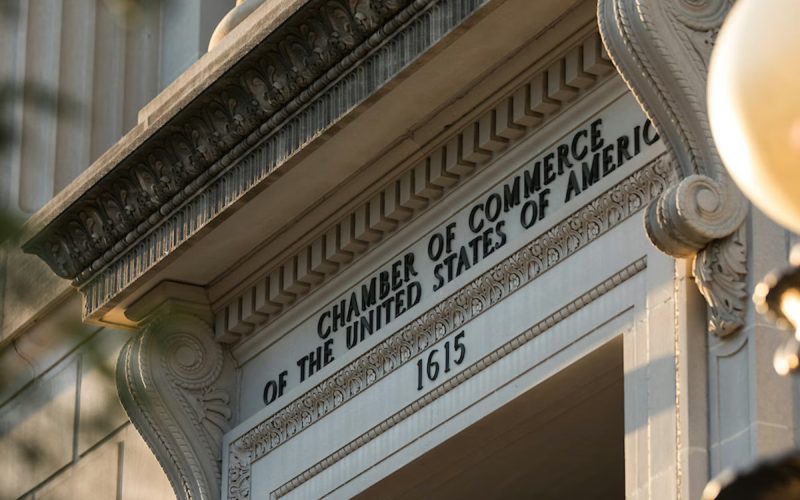
The U.S. Chamber of Commerce has issued a strong call to action urging European Union lawmakers to address concerns over the extraterritorial impact of the bloc’s sustainability regulations, following a major political deal to streamline corporate reporting and due diligence requirements.
The appeal comes after the Council presidency and European Parliament negotiators reached a provisional agreement to simplify the Corporate Sustainability Reporting Directive (CSRD) and Corporate Sustainability Due Diligence Directive (CS3D)—a move designed to ease administrative burdens and boost EU competitiveness.
Background: EU pushes to cut red tape and strengthen competitiveness
The agreement is part of a wider EU drive—initiated in response to the Letta and Draghi competitiveness reports—to deliver a “simplification revolution” by reducing regulatory burdens, especially on SMEs. Denmark, holding the rotating Council Presidency, championed the deal.
Under the CSRD changes, the scope is narrowed by raising thresholds to 1,000 employees plus €450 million turnover, exempting financial holding companies, and offering transition relief for “wave one” companies that would otherwise report in 2025–26.
Under the CS3D revisions, the scope is limited to firms with 5,000 employees and €1.5 billion turnover—targeting those seen as most capable of driving value-chain improvements. Other major changes include lighter mapping requirements, flexibility in prioritising due diligence assessments, removal of mandatory climate transition plans, elimination of an EU-wide civil liability regime, and a new penalties cap of 3% of global turnover.
Transposition of CS3D is postponed to July 2028, with compliance from July 2029.
The provisional package now awaits formal endorsement by the Council and Parliament.
U.S. Chamber welcomes simplification but warns of global implications
Reacting to the political deal, Marjorie Chorlins, senior vice president for Europe at the U.S. Chamber of Commerce, said the simplification measures represent “significant progress toward a more balanced and workable regulatory framework.” She highlighted the narrowed scope, removal of climate transition plan requirements, and the rejection of a harmonised civil liability regime as positive steps.
However, she stressed that Washington remains deeply concerned about the extraterritorial reach of EU sustainability rules, warning that this issue—left unaddressed in the agreement—creates “practical challenges for companies operating across multiple jurisdictions” and risks undermining the competitiveness of the EU itself.
Strong call to action: address overreach before final adoption
In a direct appeal to EU lawmakers, the Chamber urged the co-legislators to use the remaining legislative window to refine the package:
“We urge EU policymakers to address remaining concerns about jurisdictional overreach,” Chorlins said, emphasising that doing so would allow the EU to achieve its sustainability goals without imposing disproportionate compliance burdens on global value chains—or straining transatlantic commerce.
She affirmed that the U.S. Chamber stands ready for “constructive dialogue” to ensure a final deal that works for businesses, workers, and citizens on both sides of the Atlantic.