




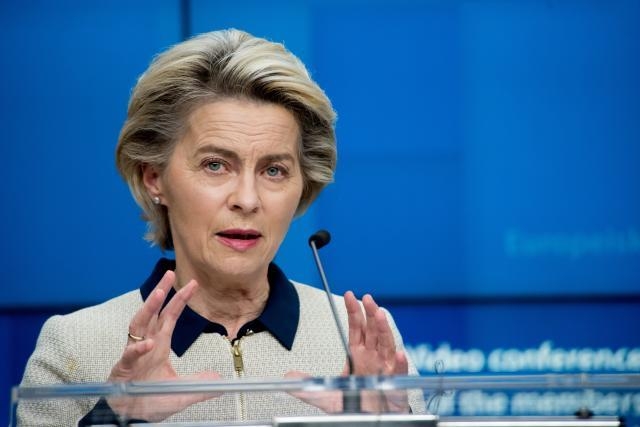
European Commission President Ursula von der Leyen defended the European Union’s Emissions Trading System (ETS), saying it delivers “clear benefits” and contains safeguards to prevent carbon prices from rising excessively, amid calls from some member states to revise the scheme.
Leaders from countries including Germany, Italy and Czech Republic this week urged the EU to consider changes to the ETS, as industry groups pressed for relief from the rising cost of carbon permits.
Speaking at a press conference following a summit of EU leaders, von der Leyen described the ETS as the bloc’s most important climate policy and said it was essential for clean technology industries that rely on a predictable CO₂ price to underpin investment decisions. Since its launch in 2005, the scheme has generated €200 billion in revenues for national governments, she added.
“The ETS has also elements that if the price for whatever reason is going too high, or the economic circumstances are tough, that you can with the ‘market stability reserve’, modulate the price,” von der Leyen said. She confirmed that the Commission would examine these mechanisms as part of a scheduled review of the ETS due in July.
German Chancellor Friedrich Merz also voiced support for the system on Thursday, after suggesting a day earlier that the EU should remain open to revising or postponing it.
“There are colleagues who are very critical of this. I don’t share this criticism in this form. The ETS system, which has now existed for 20 years, has ensured that we in Europe have implemented an effective instrument that makes growth possible without simultaneously generating additional CO₂ emissions,” Merz told reporters after the summit.
Clarifying his earlier remarks, Merz said the ETS was designed to spur innovation by putting a price on carbon emissions and should be subject to regular review. “If we have achieved this purpose, we can improve it, and that is precisely what I said,” he added.
The ETS requires power plants and industrial facilities to purchase permits for each tonne of carbon dioxide they emit, creating a financial incentive to cut pollution. EU carbon permit prices fell on Thursday after leaders floated the possibility of revising the policy.