


By Rajesh Chhabara, Managing Director, CSRWorks International
As the year draws to a close, that shift is unmistakable. Not because the challenges themselves are new — climate change, resource constraints, social expectations and governance pressures have long shaped the sustainability agenda — but because the way organisations responded to them fundamentally changed.
In 2025, sustainability moved decisively from being treated as a reporting obligation or reputational consideration to becoming a core leadership and business issue. Across boardrooms globally, it became clear that sustainability could no longer be delegated, deferred or addressed at the margins. It demanded strategic judgement, organisational discipline and executive ownership.
Looking back, this was the year sustainability shifted from ambition to accountability, from narrative to execution, and from specialist teams to board-level oversight.
From commitments to consequences
For much of the past decade, sustainability leadership was measured by commitments: net-zero pledges, policies, frameworks and voluntary disclosures. These played an important role in setting direction and raising awareness.
In 2025, however, the questions changed.
Investors, regulators and stakeholders increasingly examined whether climate and nature risks were genuinely embedded in enterprise risk management. They scrutinised whether sustainability claims were supported by reliable data and robust governance. They looked more closely at whether supply chains were resilient, transparent and ethically managed — and whether capital allocation decisions aligned with long-term sustainability outcomes rather than short-term optics.
By year-end, one reality had become clear: promise-led sustainability had given way to performance-led sustainability.
Five signals that defined sustainability leadership in 2025
Across sectors and regions, five signals consistently defined sustainability leadership throughout the year.
1. Climate risk became a core strategic issue
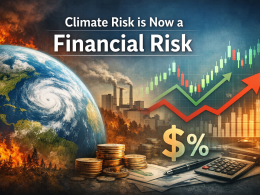
In 2025, climate was no longer viewed solely through an environmental lens. Physical risks — from extreme weather to supply disruptions — increasingly shaped discussions on investment, insurance, operational resilience and long-term planning.
Leading organisations integrated climate considerations into strategy, scenario analysis and board-level risk oversight, treating climate risk as a business continuity and value-protection issue rather than a disclosure exercise.
2. Energy transition shifted from declarations to delivery
The energy transition remained central, but its tone changed. Throughout 2025, credibility increasingly rested on near-term actions, transition plans and capital deployment, rather than distant end-state targets.
Leadership was measured less by ambition and more by the ability to translate intent into operational and financial decisions.
3. Supply chains emerged as the front line of sustainability
Scope 3 emissions, human rights and supplier resilience dominated sustainability discussions in 2025. Many organisations recognised, sometimes uncomfortably, that their sustainability performance was only as strong as their value chains.
By the end of the year, more forward-looking companies had moved beyond high-level data collection towards supplier engagement, collaboration and accountability, embedding sustainability considerations into procurement and sourcing decisions.
4. Nature and resources entered the mainstream business
Nature, biodiversity and water moved decisively from the margins to the mainstream in 2025. Increasingly, they were recognised as financially material risks, with direct implications for operations, growth, asset values and licences to operate.
This marked an important shift: nature-related issues were no longer framed primarily as environmental concerns, but as strategic business and risk management considerations.
5. Governance and data credibility took centre stage
As mandatory sustainability reporting expanded and assurance expectations grew, 2025 marked a turning point in governance maturity.
By year-end, leadership credibility depended on data quality, internal controls, clear accountability and board ownership — not simply polished disclosures. Sustainability was increasingly treated with the same discipline applied to financial reporting and enterprise risk.
The quiet shift that defined the year
One of the most consequential changes in 2025 was subtle rather than dramatic. Sustainability conversations became less ideological and more pragmatic.
There was less debate about whether sustainability mattered, and more focus on how quickly organisations could adapt, how effectively risks were managed, and how deeply sustainability was embedded into decision-making processes.
Even in markets where the term “ESG” became politicised, sustainability action continued to advance, often under different labels, because the business rationale had become undeniable.
What 2025 taught CEOs and boards
Looking back, 2025 delivered a clear lesson: the leadership challenge was not to “do more sustainability”, but to lead sustainability differently.
That meant embedding sustainability into core strategy rather than treating it as a parallel agenda; strengthening governance, controls and accountability; prioritising execution over ambition; and aligning sustainability with long-term value creation and organisational resilience.
By the end of the year, sustainability leadership was no longer defined by statements or targets, but by systems, decisions and trade-offs.
Looking beyond 2025
2025 will likely be remembered not as the year sustainability became fashionable, but as the year it became inescapable.
For organisations that responded with clarity, discipline and conviction, sustainability strengthened resilience and competitiveness. For those that treated it as a compliance exercise or communications narrative, financial, operational and reputational risks only intensified.
As leaders look ahead, one truth is clear: the question is no longer whether sustainability belongs at the centre of business strategy.
After 2025, it will be judged by what organisations are prepared to change — and how decisively they lead.