








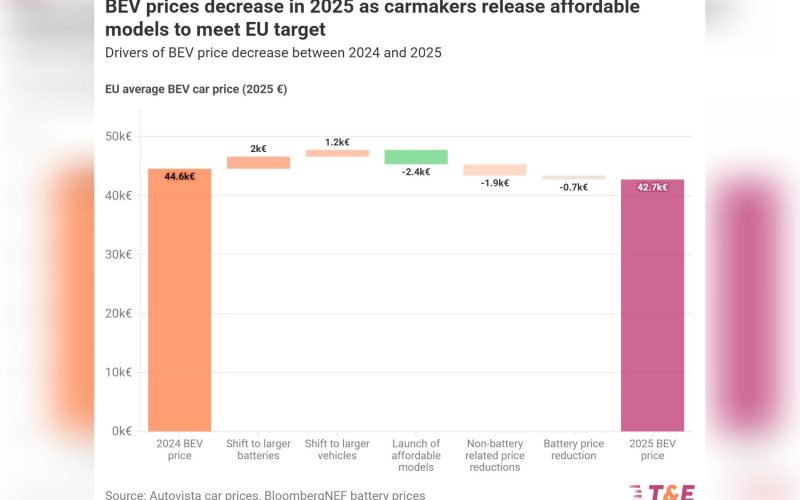
The average price of electric cars in the European Union fell in 2025 for the first time since 2020, according to a new analysis by Transport & Environment (T&E). The decline has been attributed to the launch of more affordable electric vehicle models as carmakers move to comply with the bloc’s vehicle CO₂ emissions targets.
The analysis found that the average price of an electric car in the EU dropped by €1,800, or 4%, to €42,700 last year. The decline was largely driven by the introduction of lower-cost small electric vehicles in the B-segment, where average prices fell by 13%.
Several mass-market models, including the Citroën ë‑C3 and Renault 5, were introduced as manufacturers prepared to meet the EU’s 2025 car CO₂ emissions targets.
The fall contrasts with the period between 2020 and 2024, when average electric vehicle prices increased by around €5,000 despite declining battery and component costs. T&E said weaker emissions targets during those years allowed manufacturers to prioritise larger and more profitable electric models.
Lucien Mathieu, cars director at T&E, said the timing of the introduction of lower-priced models coincided with tightening emissions rules. He added that if the EU’s 2030 emissions targets remain unchanged, electric vehicles could become cheaper to buy than petrol cars in the coming years.
The analysis also found that manufacturers accounting for about half of the EU car market have already met the emissions targets set for 2025-2027, two years ahead of schedule. Only Renault and Volkswagen are currently behind but are expected to meet the targets by 2027.
According to the report, electric vehicles reached price parity with combustion-engine cars in the D and E segments in 2024. EVs in smaller vehicle categories—segments A, B and C—could reach similar price levels by 2030 if cost reductions continue to be passed on to consumers.
However, the analysis warned that changes to the EU’s emissions rules could affect this timeline. The European Commission has proposed allowing manufacturers to average the 2030 target over three years. T&E estimates that such a change could reduce electric vehicle market share in 2030 from 57% to 47%.
Industry proposals to average the target over five years could lower the share further to about 32%, according to the report.
Mathieu said weakening the 2030 emissions target could slow the introduction of affordable electric vehicles and delay the point at which EV sales accelerate across the European market.