







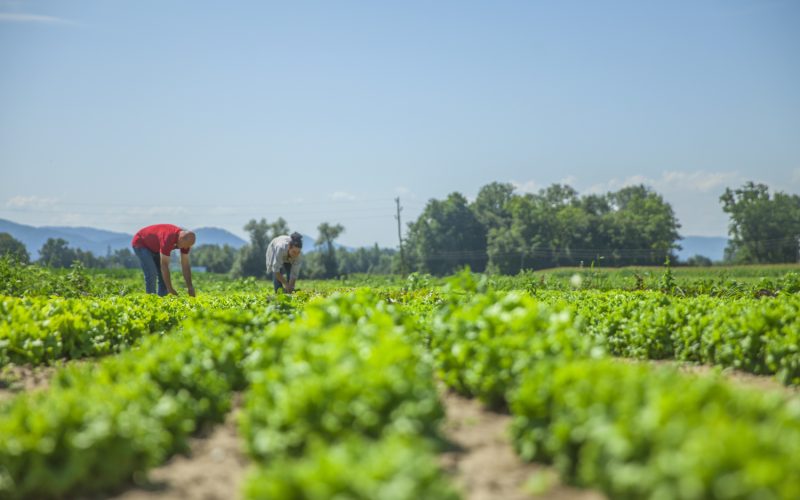
Ecuador has contracted its first parametric agricultural insurance policies, providing protection against extreme rainfall and drought to smallholder rice and maize farmers.
The policies, placed in the domestic insurance market, are expected to benefit up to 10,000 people in farming households. They form part of the Tripartite Agreement Programme, a public-private partnership between the Insurance Development Forum (IDF), the United Nations Development Programme (UNDP) and Germany’s Federal Ministry for Economic Cooperation and Development (BMZ) through the InsuResilience Solutions Fund (ISF).
Ecuador’s agricultural sector has faced increasing climate-related losses in recent years, with floods, droughts and wildfires disproportionately affecting smallholders, who account for around 75% of the country’s farmers.
Launched in 2023 and led by the Ministry of Agriculture, Livestock and Fisheries (MAGP), the initiative developed parametric insurance products that trigger automatic payouts when rainfall or drought levels exceed predefined thresholds. The structure is designed to enable faster and more transparent compensation, allowing farmers to recover and reinvest in future planting cycles.
The two products were designed by IDF members AXA Climate, Guy Carpenter México and Blue Marble, in partnership with MAGP. Local insurer Hispana de Seguros is implementing the policies. The programme was co-funded by ISF and IDF members, with regulatory and technical support from UNDP and Ecuadorian authorities.
Juan Carlos Vega, Ecuador’s Minister of Agriculture, said the policies provide smallholder farmers with financial protection against climate risks and support national food security.
Premium financing from ISF has enabled initial coverage for 2,511 smallholder rice and yellow maize producers across the provinces of Guayas, Los Ríos, Manabí and Loja for the January–May 2026 planting cycle. Of those covered, 44% are women and 15% are under 29. At least 300 additional producers are expected to receive coverage in the second planting cycle from July to November 2026.
UNDP said the initiative could inform national policy on climate and agricultural insurance and may be scaled to other regions and crops.