







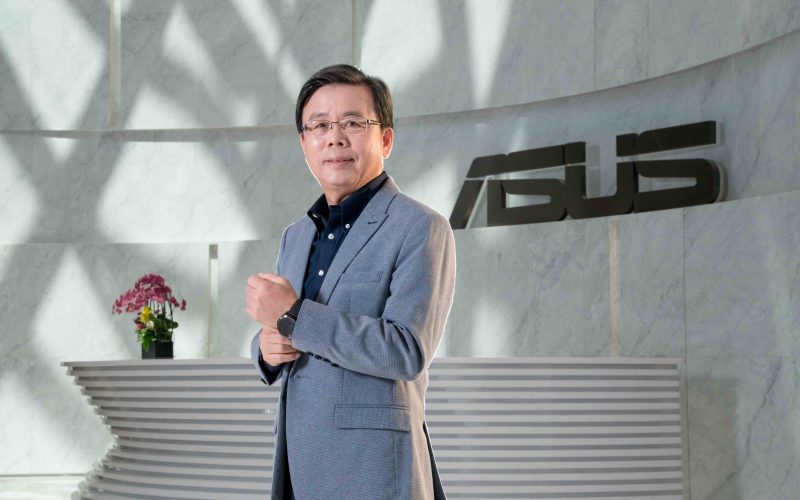
“Sustainability must be integrated into the very DNA of an organisation,” says ASUS Co-CEO Samson Hu in this exclusive interview following the company’s triple triumph at the 11th ASRA. With Platinum in climate reporting and two Gold awards, ASUS continues to set a benchmark for transparent, data-driven and innovation-led sustainability performance. Hu discusses board-level governance, circularity, low-carbon technology investments, and why proactive alignment with global standards such as ISSB and CSRD is shaping ASUS’s long-term resilience and market leadership.
Congratulations on your company’s success at the Asia Sustainability Reporting Awards. What does this achievement signify from a leadership perspective?
We deeply appreciate the organisers’ affirmation of ASUS. This award validates ASUS’s long-standing commitment to a sustainability strategy that emphasises “Using Digitised Data and Scientific Management Practices to Support Sustainable Value Creation through Core Competencies.” We firmly believe that the success of an outstanding enterprise is not solely defined by financial performance, but more importantly, by its commitment to and practice of Environmental, Social, and Governance (ESG) principles.
This award also significantly strengthens stakeholders’ trust in ASUS. Through high-quality sustainability reports, we can effectively communicate ASUS’s sustainability philosophy and achievements to our investors, customers, employees, and suppliers, fostering even stronger collaborative relationships.
How does sustainability fit within your overall business strategy and long-term value-creation goals?
At ASUS, the core spirit driving our sustainability efforts stems directly from our corporate philosophy: “Strive to be among the world-class green high-tech leaders and to provide valuable contributions to humanity.” We believe that sustainability performance must transcend traditional ethical appeals and be transformed into objectively measurable strategic indicators.
ASUS adopts a sustainability strategy centred on “Using Digitised Data and Scientific Management Practices to Support Sustainable Value Creation through Core Competencies.” This involves integrating ESG elements into every decision-making process and implementing them with a practical, fundamental approach to cultivate sustainable competitive advantages. This strategic integration is the core pathway for ASUS to achieve its vision of becoming “the world’s most admired innovative leading technology enterprise in the new digital era”.
What role do you personally play in setting and steering the sustainability agenda within the company?
I play a dual role in sustainability governance, ensuring that our sustainability strategy is effectively implemented from the board level down to daily operations. ASUS established a Sustainability Committee in 2025, which includes five independent directors, myself, and my fellow Co-CEO, S.Y. Hsu. This committee is responsible for reviewing the group’s sustainability management operations and execution progress, reporting annually to the Board of Directors.
Concurrently, I also serve as the highest manager of the Sustainability and Green Quality Management Centre. In this capacity, I directly oversee sustainability projects and monitor the achievement of targets for our material issues. This dual involvement ensures that our sustainability goals are translated into concrete actions, thereby tightly integrating sustainability performance with our overall operational objectives.
Many CEOs now see sustainability as a competitive advantage. How has it shaped innovation, market growth, or stakeholder trust for your organisation?
At ASUS, we have redefined the role of sustainability within our enterprise through strategy guru Michael E. Porter’s concept of ‘Creating Shared Value’. We leverage our core competencies for sustainability initiatives, such as developing more energy-efficient products, promoting a circular economy, and implementing responsible manufacturing practices.
This approach allows us to address real environmental and social needs while simultaneously creating significant business value. It not only enables us to meet stakeholder expectations but also establishes a clear, differentiated competitive advantage in the market. For ASUS, sustainability is not merely a cost; it is a powerful driver for innovation and growth.
Why do you believe sustainability reporting is vital for corporate leadership today?
With the issuance of the IFRS Sustainability Disclosure Standards, the EU Taxonomy Regulation, and the EU Corporate Sustainability Reporting Directive (CSRD), financial and non-financial performance are progressively integrating. How companies translate their ESG performance into financial value has become a central issue in sustainability reporting.
ASUS has adopted a proactive strategy in this regard: In 2019, we were among the first to disclose Sustainability Accounting Standards Board (SASB) metrics. From 2023, we have progressively adopted the EU Taxonomy and IFRS Sustainability Disclosure Standards, and in 2024, we further aligned with CSRD requirements, continuously enhancing the transparency and completeness of our information disclosure.
Through a comprehensive sustainability management framework and these proactive initiatives, ASUS not only responds to the capital market’s expectations for sustainability information but also lays a solid foundation for aligning with international standards.
How do you ensure that sustainability performance remains a board-level priority amid other business pressures?
To ensure that sustainability performance remains a board-level priority and is effectively implemented amidst other business pressures, ASUS has established a robust three-tiered governance mechanism. Let’s take climate change as a prime example:
Board-Level Oversight: ASUS’s overarching sustainability policy and climate change response strategies receive direct approval from the Chairman. Furthermore, since 2022, we have been providing quarterly reports to the Board of Directors on the progress of our greenhouse gas inventory and climate reduction actions.
Committee-Driven Integration & Risk Management: The Sustainability Committee is responsible for the horizontal integration of sustainability matters across the entire group. In parallel, our Business Continuity Management (BCM) Committee identifies and manages risks that could lead to operational disruptions. Sustainability is a dedicated task force within BCM, specifically assessing climate change-related risks on our operations and green product development.
Operational Execution: The Sustainability Centre serves as the primary executing unit, collaborating with various subsidiaries. This centre convenes quarterly meetings to ensure the diligent implementation of our sustainability action plans.
Could you share an example of a major decision or investment where sustainability considerations played a decisive role?
Taking climate issues as a prime example, ASUS’s significant commitments and actions in this area include achieving validation for our long-term Science Based Targets initiative (SBTi) goals by 2025, and committing to 100% renewable energy usage (RE100) by 2035. These are not just aspirations; they are backed by concrete actions:
Renewable Energy Procurement: We are actively signing Corporate Power Purchase Agreements (CPPAs) with renewable energy providers and procuring Renewable Energy Certificates (RECs). As a result, as of 2024, our global operational sites have already achieved 55% renewable energy utilisation (RE55).
Green Product Design and Circularity: We prioritise the design of eco-friendly products and have established a robust global recycling market. In 2024, eco-designed products accounted for 89% of our revenue, and our global recycling services now cover over 82% of our sales markets.
Supply Chain Decarbonisation: We are driving decarbonisation throughout our supply chain. Our key suppliers have reduced their emissions intensity by 28% compared to 2020, and they are full members of the Responsible Business Alliance (RBA). Furthermore, in 2025, we are set to obtain the world’s first ISO 20400 5-star Sustainable Procurement Role Model certification.
Low-Carbon Technology Investment: We are continuously evaluating and investing in low-carbon technologies to accelerate our journey towards net-zero emissions.
These actions are not merely aimed at achieving our ambitious climate goals; they are fundamental and strategic choices for ASUS to build long-term competitive advantages and ensure our sustained success.
As regulatory frameworks such as ISSB gain traction, how do you view their impact on Asian businesses?
As the ISSB (IFRS Sustainability Disclosure Standards) gains increasing traction, Asian businesses are presented with significant development opportunities, yet also face numerous challenges. Adopting the ISSB disclosure framework effectively demonstrates how companies manage sustainability risks and opportunities, integrating sustainability into their operational and product strategies, thereby enhancing corporate resilience and competitiveness. Furthermore, aligning with ISSB standards helps to improve the transparency and consistency of corporate sustainability information, making it easier for international investors to understand and compare companies’ sustainability performance, which in turn strengthens their competitive edge in global capital markets.
However, given the lack of fully unified regulatory oversight for sustainability reporting across various Asian countries, companies will need to re-establish cross-departmental collaboration and data collection mechanisms, whether they are implementing the ISSB framework or transitioning from existing reporting standards. Moreover, the ISSB requires that sustainability information boundaries align with consolidated financial reporting boundaries. For diversified multinational corporations, this presents the complex challenge of how to reasonably assess cross-industry sustainability risks and integrate this information effectively.
Looking ahead, what are your top three sustainability priorities for the next three years?
Looking ahead, our top three sustainability priorities for the next three years will continue to centre on ASUS’s core pillars: climate action, circular economy, and responsible manufacturing. We plan to further unveil detailed five-year roadmaps for each of these critical areas. Our overarching approach will remain rooted in our data-driven measurement and technology-enabled management sustainability strategy, ensuring that sustainability performance is not just a separate initiative but is effectively and seamlessly integrated with our overall business operations.
What message would you like to send to your peers and the wider business community about responsible leadership in this decisive decade for climate and sustainability?
To my peers and the wider business community, I would like to share three key insights from ASUS’s experience regarding responsible leadership in this decisive decade for climate and sustainability:
First, sustainability is an opportunity to build long-term competitive advantage. We are at a critical turning point for global climate action. Climate change and resource scarcity are fundamentally reshaping the industrial landscape. Companies that act proactively now will establish significant long-term competitive advantages, while those that merely react passively will ultimately face obsolescence.
Second, leaders must lead by example and drive change. It is imperative to integrate sustainability into the very DNA of our organisations. This means incorporating ESG considerations comprehensively, from high-level strategy formulation down to everyday operations.
Third, embrace innovation and be genuinely transparent. We urgently need innovative technologies to overcome existing sustainability bottlenecks. Equally important, we need transparent communication to build and maintain the trust of our stakeholders. Only through open collaboration and shared effort can we truly accelerate the corporate sustainability transformation that is so vital for our future.