




Mercedes-Benz Group AG has presented an updated decarbonisation roadmap and a recalibrated corporate sustainability framework during its Sustainability Dialogue x Sustainability Update event in Sindelfingen.
The luxury automaker outlined concrete emissions reduction milestones under its Ambition 2039 program, balancing decarbonisation commitments against volatile market conditions, customer demand, and electric vehicle infrastructure availability. The updated strategy targets a 90 per cent reduction in production emissions, an 80 per cent cut in use-phase emissions as market conditions allow, and an overall 70 per cent reduction in CO₂ across all value-chain stages by 2039, compared to 2019 baseline levels.
Beyond 2039, Mercedes-Benz plans to pursue a net-zero trajectory in the following decade, committing to reduce total lifecycle emissions by at least 90 per cent relative to 2019 while permanently neutralizing any remaining residual emissions below 10 per cent.
Key operational, environmental, and strategic elements of the updated roadmap include:
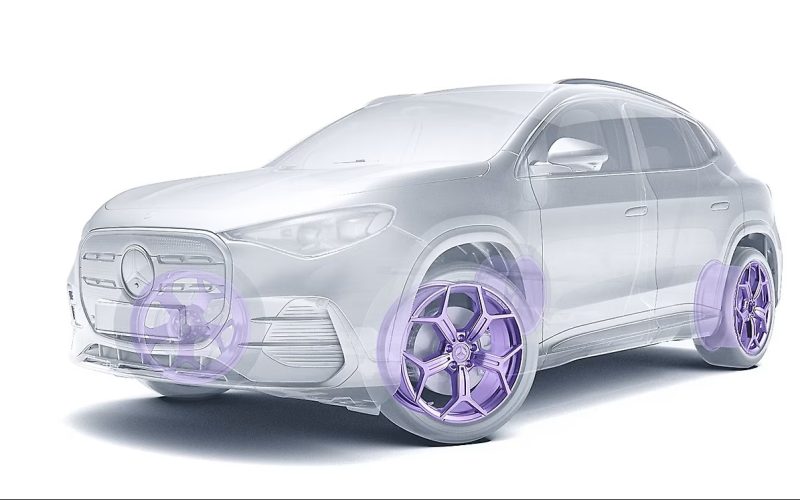
- Product electrification: Plans to launch 14 fully electric vehicles between 2025 and 2027, highlighted by models such as the all-electric GLC, which achieves a two-thirds reduction in lifecycle CO₂ emissions compared to its internal combustion predecessor.
- Renewable production power: Externally sourced electricity across global operations is 100 per cent renewable, with total renewable energy consumption reaching 51 per cent at Mercedes-Benz Cars manufacturing facilities and 39 per cent at Mercedes-Benz Vans sites.
- Recalibrated four-pillar strategy: Effective from 2027, the company will focus operational resources across four core areas: Decarbonisation, Circularity (targeting 40 per cent secondary raw material usage within a decade), Safety (combining traffic safety and digital trust), and People (social responsibility and human rights protection).
- Supply chain transparency: Implements enhanced tracking and low-carbon material integration across upstream supply networks to reduce primary raw material carbon footprints.
Olaf Schick, Member of the Board of Management of Mercedes-Benz Group AG for Integrity, Governance & Sustainability, stated that embedding transparency into Ambition 2039 translates high-level sustainability targets into operational reality across product design, supply chains, and manufacturing processes.
Schick added that despite challenging economic and geopolitical conditions, sustainability remains central to the group’s long-term competitiveness, product development, and business resilience.