





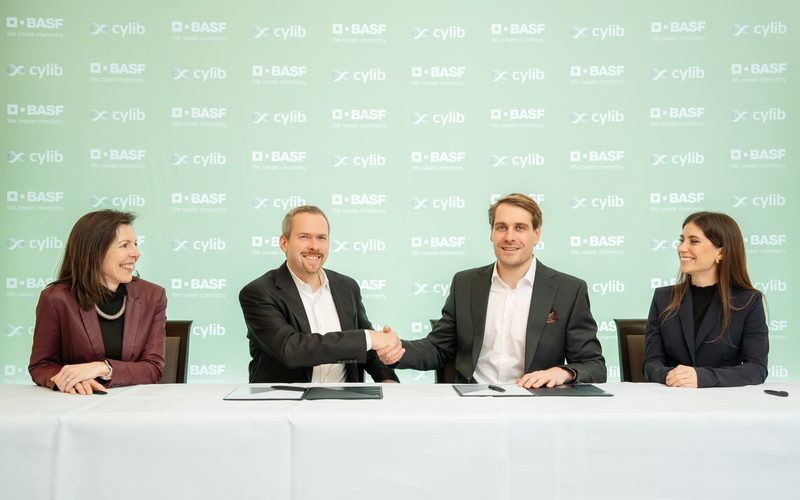
German chemical giant BASF has signed an agreement to sell its Battery Recycling business to German battery recycling specialist cylib, sharpening its Battery Materials portfolio exclusively around Cathode Active Materials (CAM).
Signed on 20 November 2026 under BASF’s “Winning Ways” corporate strategy, the divestment encompasses BASF’s battery recycling operations across Europe and North America. The transaction includes intellectual property, customer contracts, partner relationships, and BASF’s black mass production plant and battery recycling prototype facility in Schwarzheide, Germany. Financial terms were not disclosed.
Expected to close between the second and third quarters of 2027, subject to regulatory approvals and customary closing conditions, the deal aims to integrate BASF’s recycling capabilities into a specialist platform with greater industrial scale across the battery recovery value chain. BASF will continue managing the business and its customer relationships until completion.
Dr. Daniel Schönfelder, President of BASF’s Battery Materials division, stated that the recycling team has built competitive industrial assets and customer partnerships over recent years, adding that joining cylib will allow the business to leverage specialised recycling technology and an integrated model spanning end-of-life battery processing to critical raw material recovery.
Dr. Gideon Schwich, Co-Chief Executive Officer and Co-Founder of cylib, said acquiring BASF’s unit expands cylib’s European footprint with the addition of the Schwarzheide black mass site, strengthening Europe’s supply security for critical raw materials such as lithium, nickel, and cobalt.
The sale builds on a strategic recalibration initiated by BASF in 2024 amid shifting dynamics in the global electric vehicle and battery sectors. Alongside the recycling divestment, BASF is evaluating strategic partnership options for its currently mothballed production facility in Battle Creek, Michigan, and its Precursor Cathode Active Materials (PCAM) site in Harjavalta, Finland.
Anup Kothari, member of the Board of Executive Directors of BASF SE, noted that while Battery Materials operates in an attractive long-term growth sector, it carries significant market and technology risks, making portfolio focus essential to enable standalone divisions to compete effectively and maximise value.
Schönfelder added that concentrating resources on nickel-based Cathode Active Materials—where BASF’s chemistry expertise drives battery performance, safety, cost efficiency, and sustainability—positions the division to build on recent long-term customer agreements and lower capital expenditure.