






British International Investment (BII), the UK’s development finance institution and impact investor, has partnered with Spanish fashion giant Inditex—owner of high-street retailer Zara—and a coalition of global financiers to back a new fund aimed at decarbonising textile, apparel, and footwear supply chains across emerging markets.
Managed by Social Investment Managers & Advisors (SIMA) and conceived by the World Bank Group, the Decarbonisation of Textile, Apparel, & Footwear Suppliers Fund (D-TAFS) is targeting a total capitalisation of up to $400 million, with a first close expected to reach $225 million. Alongside BII and Inditex, anchor backers include the International Finance Corporation (IFC), Dutch entrepreneurial development bank FMO, French development finance institution Proparco, the Global Environment Facility, and the Apparel Impact Institute.
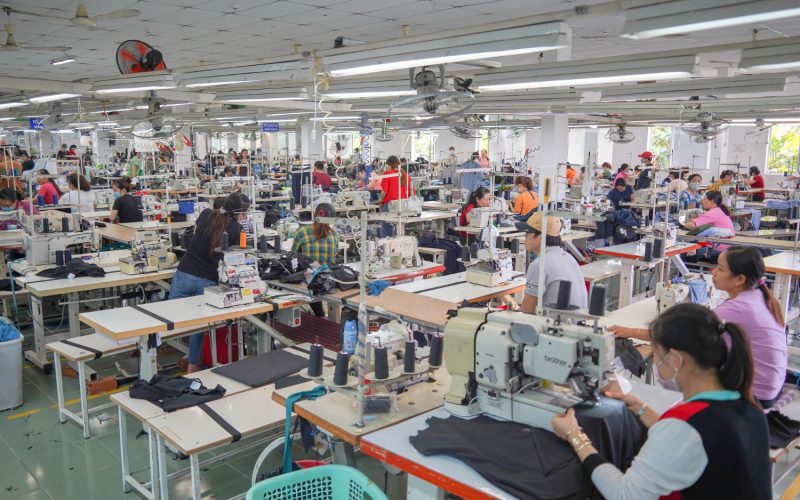
Designed to bridge a critical financing gap for small and medium-sized manufacturers across Asia, the Middle East, North Africa, and Latin America, D-TAFS will combine tailored long-term debt financing with technical assistance. Capital will be deployed toward on-site renewable energy installations, machinery and boiler upgrades, process efficiency improvements, water reuse, and wastewater treatment—reducing greenhouse gas emissions while lowering energy and water consumption at the factory level.
Leslie Maasdorp, Chief Executive Officer of British International Investment, stated that decarbonising fashion begins in the factories where garments are manufactured rather than on the shop floor. He noted that BII’s commitment through D-TAFS unlocks long-term capital for emerging-market suppliers to adopt cleaner technologies, cutting emissions at the source and building a more resilient global textile sector.
Asad Mahmood, Chief Executive Officer of SIMA Funds, emphasised that capital availability alone is insufficient without customised loan structuring and hands-on implementation support to prevent factory upgrades from stalling as paper studies. By bringing together the World Bank Group, Inditex, and development financiers, he said, the initiative turns a systemic supply chain challenge into a scalable, investable solution that enhances both climate impact and factory competitiveness.
Óscar García Maceiras, Chief Executive Officer of Inditex, added that over the past two years Inditex has worked closely with suppliers and independent engineering consultants to map factory needs and design tailored transformation plans, noting that D-TAFS provides the crucial financing mechanism to turn those identified improvements into measurable operational results.