






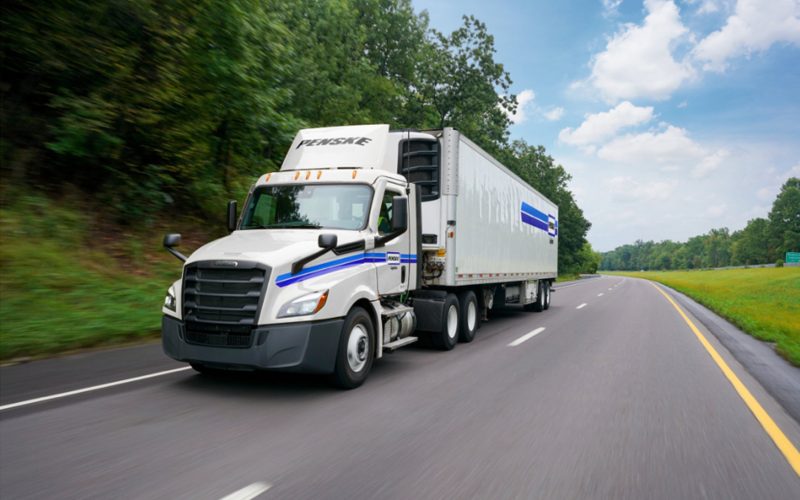
Bridgestone Americas and Penske Transportation Solutions have announced the first-phase findings of their “Decarbonization Lab,” a joint initiative designed to pilot and validate commercially viable solutions for reducing CO₂ emissions in commercial fleets.
Leveraging advanced data analytics from Dynamon, the Lab monitored more than 500,000 fleet miles to test a combination of hardware and operational shifts under real-world conditions. The results demonstrated that significant carbon reductions can be achieved through the integration of existing technologies and data-driven route planning.
“The Decarbonization Lab is a testament to how sustainable transformation can be accelerated when we work together,” said Erik Seidel, Head of Sustainability for Bridgestone in the Americas, Europe, Middle East and Africa.
Key performance findings
The first phase focused on three core pillars of fleet management:
- Tire efficiency: The deployment of low-rolling-resistance retreads, Bridgestone tire casings, and the IntelliTire™ pressure monitoring system resulted in a 6.35% improvement in miles per gallon (mpg).
- Renewable diesel testing: The teams evaluated the feasibility of using renewable diesel in Tennessee—a region outside traditional Low Carbon Fuel Standard (LCFS) states like California. The pilot focused on the maintenance and efficiency impacts of using the premium drop-in fuel at scale.
- Logistics optimisation: By re-engineering Bridgestone’s automotive tire retail distribution network, the partners project a reduction of 152,000 miles. If scaled across their dedicated fleet, this would represent a 4–6% decrease in total CO₂ emissions.
The Lab’s findings underscore a central message for the transport sector: decarbonisation is a complex challenge that requires cross-industry cooperation rather than isolated efforts.
“Our companies have enjoyed a successful history of uncovering great solutions that benefit our customers and the industry,” said Bill Combs, Senior Vice President of Partnership & Sustainability Strategy at Penske.
The two companies plan to enter a second phase of testing in 2026 to further refine these approaches. Detailed results from the first phase will be presented by leaders from both organisations at the ACT Expo 2026 in Las Vegas on 4 May.