










The Green Climate Fund (GCF) has concluded its 46th Board meeting by approving a record-breaking $1.97 billion in new climate finance across 21 projects and accrediting 16 new partners. This latest funding round, bolstered by newly introduced balance sheet efficiency measures, pushes total GCF approvals for 2026 to an unprecedented annual record of $3.3 billion.
The latest approvals expand the GCF’s total portfolio to 379 projects and programmes, representing $22.3 billion in direct funding and $87.3 billion when including co-financing. Demonstrating a strong commitment to local ownership, Direct Access Entities (DAEs) will manage 34 per cent of the newly approved finance. This funding tranche includes the first single-country projects for Algeria, Cameroon, Moldova, and Yemen, alongside the organisation’s first direct sovereign loan responding to the Belém call to action for the Congo Basin Forests. Additionally, two Brazilian projects represent the first approvals stemming from the GCF Readiness-supported Brazil Climate and Ecological Transformation Investment Platform.
Organisational efficiency reforms have shown tangible results during this cycle, with 13 of the 15 projects subject to the Efficient GCF standard meeting an average review time of six months, well below the nine-month target. The Board also accredited 16 new applicants, including the Maldives Finance and Leasing Company Private Limited as the first national DAE for the Maldives. Thirteen of these entities were processed under the Revised Accreditation Framework in an average of four months.
In preparation for the upcoming GCF-3 programming period, the Board adopted two landmark policies designed to broaden the fund’s capital base. These include an updated contributions policy offering greater flexibility for engagement, and a novel framework to mobilise capital from non-sovereign and alternative sources.
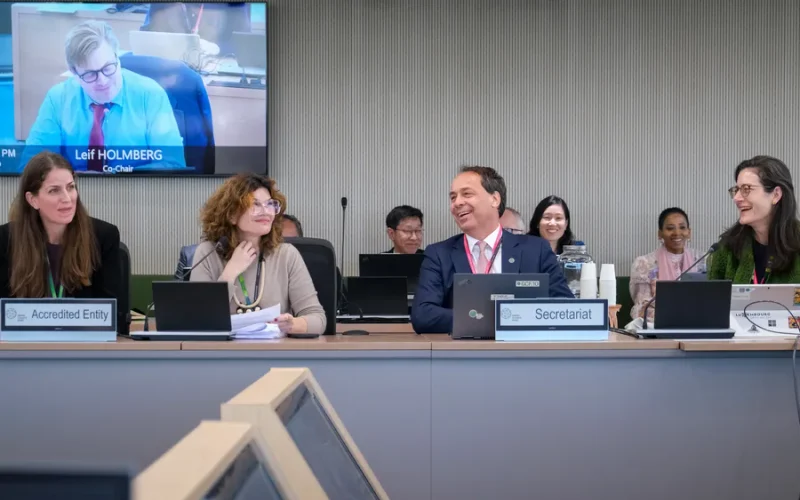
The meeting culminated in the reappointment of Mafalda Duarte for a second four-year term as Executive Director. Duarte attributed the unanimous vote of confidence to the success of recent deep reforms, which have enhanced accreditation efficiency, streamlined project due diligence, and optimised balance sheet management while directing record finance to the most vulnerable regions. Co-Chairs Leif Holmberg and Ambassador Seyni Nafo, concluding their two-year tenures, praised the Board’s capacity to lay a robust foundation for the third programming cycle whilst continuing to deliver climate finance at scale through national and regional institutions.