






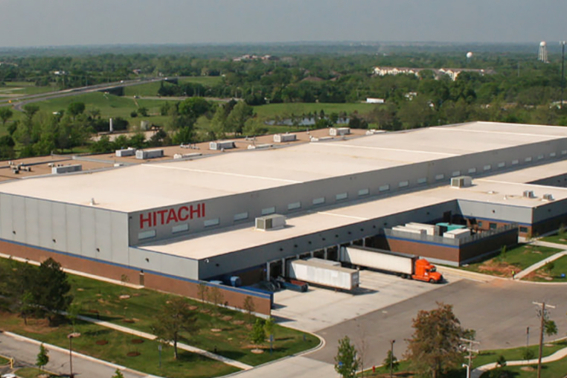
Hitachi, Mitsui O.S.K. Lines (MOL), and Japan Airlines (JAL) have signed a Memorandum of Understanding (MOU) to launch Japan’s first pilot test of Direct Ocean Capture (DOC) technology on Kume Island, Okinawa Prefecture. The trial will evaluate an engineered solution that directly extracts and separates carbon dioxide dissolved in seawater.
The pilot will utilise land-based, containerised equipment connected to an operating seawater intake system to process local marine water, capture dissolved carbon dioxide, and return the treated water. Kume Island was selected due to its existing ocean research infrastructure, including ongoing Ocean Thermal Energy Conversion (OTEC) initiatives. The trial aims to gather core data on operational feasibility, potential environmental impacts, and technical requirements to support future deployments across Japan’s coastline.
Direct Ocean Capture leverages the ocean’s natural carbon equilibrium. Because carbon dioxide is approximately 100 to 150 times more concentrated in seawater than in the air, extracting dissolved carbon prompts the ocean to absorb replacement carbon dioxide from the atmosphere. This mechanism offers a potential route for lower-cost, lower-energy carbon removal, which is critical for hard-to-abate industries such as shipping and aviation where electrification remains challenging.
All three companies previously invested in US-based DOC developer Captura Corp., and the Kume Island trial represents a key step toward establishing a domestically self-sufficient carbon economy. Long-term ambitions include using the recovered carbon dioxide as feedstock for synthetic fuels, including lower-emission E-SAF (synthetic aviation fuel).
Under the division of responsibilities, Hitachi will manage technical data analysis, water quality monitoring, and physical AI systems to optimise plant energy efficiency and build a Measurement, Reporting, and Verification (MRV) platform for carbon credits. MOL will coordinate local partnerships, site logistics, and regional economic development using its existing relationship with Kumejima Town. JAL, alongside regional carriers Japan Transocean Air and Ryukyu Air Commuter, will lead promotional and educational outreach while evaluating the suitability of the captured carbon for future E-SAF procurement.