







London-based AI waste intelligence company Greyparrot has secured $27 million (£20 million) in Series B funding, led by technology investor Omar Mir, as it targets the abatement of over one million tonnes of waste by 2030. The fresh capital injection follows a significant operational milestone, with the company’s computer vision systems now having detected more than one trillion waste objects globally.
The investment will support rapid scaling across North America and Europe, whilst expanding the firm’s core AI, data science, and product development teams. Installed above sorting belts in processing facilities across more than 20 countries, Greyparrot’s proprietary camera systems, known as Analysers, track materials, packaging types, and specific consumer brands in real time.
By replacing occasional manual sampling with continuous, shift-by-shift monitoring, waste operators including WM, Veolia, Biffa, and FCC can refine recovery rates and streamline compliance reporting. Facilities deploying the system have recorded efficiency gains ranging between 10% and 30%, with one site achieving annual savings in excess of £1.5 million.
The platform is also gaining traction among major fast-moving consumer goods brands such as Unilever, L’Oréal, and Kenvue. Utilising Greyparrot’s Deepnest software, manufacturers are analysing post-consumer packaging performance to guide sustainable redesigns and meet statutory obligations under Extended Producer Responsibility schemes and the EU Packaging and Packaging Waste Regulation. Regulatory acceptance is also advancing, with the UK Environment Agency accepting AI-derived material data for official compliance submissions for the first time in early 2026.
With less than 0.1% of the world’s 2.3 billion tonnes of annual solid waste currently subjected to audit, vast quantities of valuable secondary resources remain unaccounted for. Across Greyparrot’s global deployment, the technology has already identified recoverable materials valued at an estimated $2.5 billion, including 17.4 billion PET bottles and 4.2 billion aluminium containers.
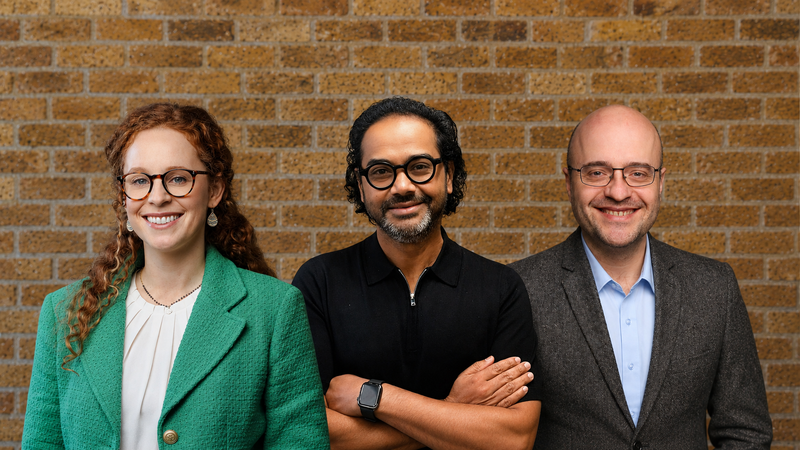
Co-founder and Chief Executive Mikela Druckman emphasised that data acts as the vital infrastructure required to unlock waste as a commercial resource. Co-founder Ambarish Mitra added that precise measurement is essential for establishing secondary materials as a tradeable asset class, helping transform the circular economy from a long-term ambition into active industrial infrastructure.