








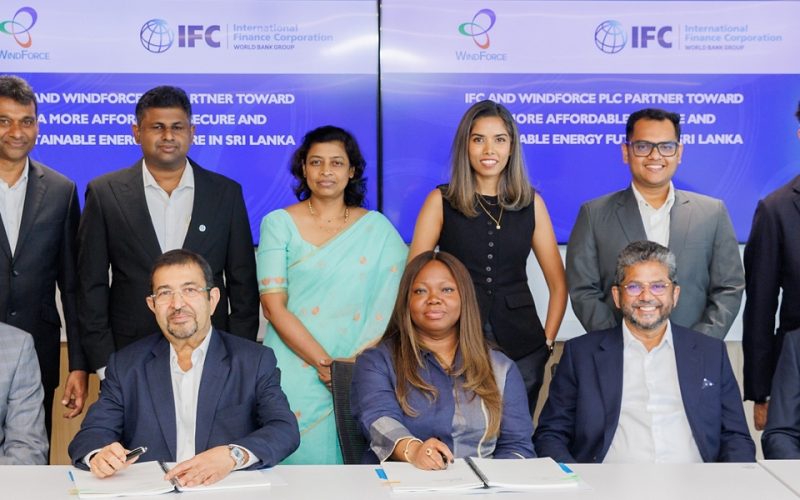
The International Finance Corporation (IFC) has partnered with WindForce PLC to develop Sri Lanka’s first utility-scale 100-megawatt (MW) solar power facility. The project is set to be a cornerstone of the nation’s economic recovery, aimed at lowering electricity costs, enhancing energy security, and creating more than 3,000 jobs.
The facility is expected to generate approximately 220 gigawatt-hours (GWh) of clean electricity annually. This output will significantly advance Sri Lanka’s national target of sourcing 50–70% of its power from renewable energy by 2030.
The IFC is providing a local-currency loan of up to $18 million to WindForce, the country’s leading renewable energy firm. This financing is supported by the IDA21 Private Sector Window Local Currency Facility. In addition to the solar plant, the investment will fund critical infrastructure to enable future battery storage and renewable projects, aimed at strengthening grid stability.
“This is a defining milestone for WindForce,” said Manjula Perera, Managing Director of WindForce PLC. “Partnering with IFC is a strong validation of our strategy, governance standards, and long-term vision. This financing enables us to accelerate our investments in renewable energy and energy storage.”
With electricity costs in Sri Lanka currently amongst the highest in the region, the shift toward domestic renewable energy is viewed as essential for long-term competitiveness. The partnership aligns with the World Bank Group’s Country Partnership Framework, which seeks to reduce the country’s reliance on expensive imported fuels.
Beyond capital, the IFC will provide advisory support to WindForce to enhance its technical and operational capabilities in areas such as grid resilience, sustainability, and cybersecurity.
Gevorg Sargsyan, Country Manager for the World Bank Group in Sri Lanka and Maldives, noted the significance of the timing: “This investment—IFC’s first infrastructure energy transaction since the crisis, and the first energy deal in Sri Lanka in over a decade—shows how private capital can accelerate the country’s energy transition.”
The solar project complements Phase I of the World Bank’s ‘Secure, Affordable, and Sustainable Energy Program’, which includes a $30 million IDA credit to modernise transmission infrastructure. By blending private investment with institutional reforms, the initiative aims to build a more robust energy system capable of supporting Sri Lanka’s annual demand of 15,000–16,000 GWh.
The project is expected to create a range of skilled and semi-skilled employment opportunities, building local capacity within the renewable energy and infrastructure sectors.