



Agricultural giant Bayer and energy leader bp have parntered to scale the production of camelina, a resilient oilseed crop, under the brand name newgold™. The partnership will initially focus on the North American market, combining Bayer’s seed technology and farmer network with bp’s refining and fuel expertise to address the surging global demand for sustainable fuels.
The alliance aims to establish a reliable market for intermediate oilseeds to supply the biodiesel, renewable diesel (RD), and sustainable aviation fuel (SAF) sectors. Industry estimates suggest the demand for these fuels will nearly triple to 40 billion gallons by 2040.
The collaboration follows Bayer’s acquisition of camelina assets in early 2025. Bayer is currently testing both long and short-season biotypes in the Northern Plains of the US and the Canadian Prairies (Saskatchewan and Alberta) as it prepares for a full-scale commercial launch.
“This alliance will help us to connect the value chain necessary to bring camelina to market and provides our farmer customers greater market certainty,” said Frank Terhorst, Head of Strategy and Sustainability for Bayer’s Crop Science division.
Philipp Schoelzel, Senior Vice President of Biofuels Growth at bp, added that the collaboration represents bp’s strategy of working with “trusted partners with complementary capabilities” to deliver high-demand products while driving shareholder value.
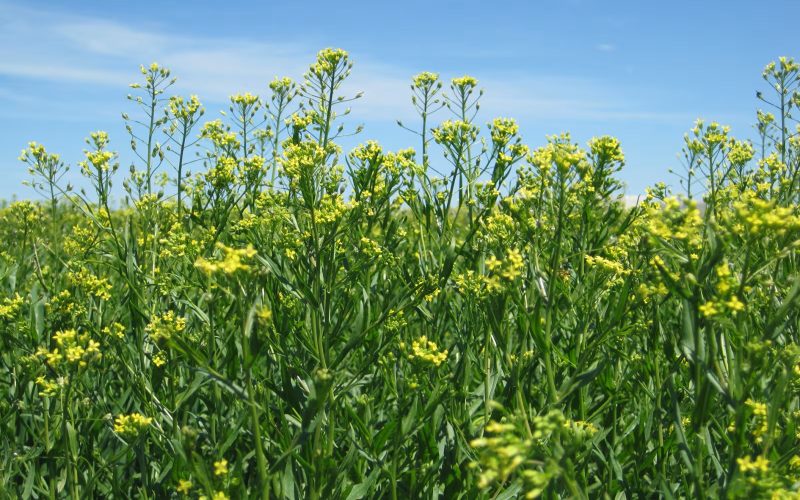
Camelina is considered a high-potential feedstock for renewable fuels due to its low-carbon intensity and hardiness. The crop offers several unique agronomic advantages:
- Flexible growth: It can be grown in both spring and winter and is drought-tolerant and resistant to pod shatter.
- Non-food competition: Because it can be grown on idle or fallow land, or as an “intermediate” crop between main rotations, it avoids competing with primary food production.
- Sustainability: The crop requires lower inputs compared to traditional oilseeds, further reducing its environmental footprint.
Under the newgold™ brand, the crop is being positioned as a “profit multiplier” for growers. Farmers can integrate it into their operations as a cover crop to add value between seasons, use it to diversify income within existing rotations, or plant it on marginal land to turn underutilised acres into productive assets.
The alliance targets sectors where electrification remains a significant challenge, such as aviation, marine, rail, and heavy-duty transport. By developing a scalable supply of camelina-derived biofuels, Bayer and bp aim to provide a practical solution for decarbonising these critical transport systems.
As the partnership matures, both companies intend to leverage Bayer’s industry-leading breeding programme to further enhance camelina’s global potential, ensuring it meets the rigorous standards of the rapidly evolving low-carbon fuel economy.