




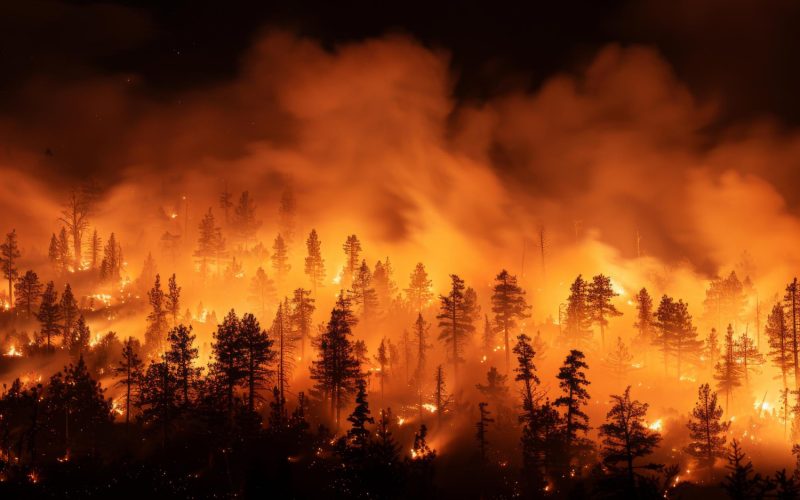
The European Commission has expanded its wildfire response capacity, financing and coordinating a record deployment of emergency personnel and aerial assets under the EU Civil Protection Mechanism. The mobilization comes in response to data indicating that European wildfire seasons are becoming longer, starting earlier in the year, and causing more severe ecological and structural damage.
A contingent of 777 firefighters from 14 European nations will be strategically pre-positioned in high-risk zones across Cyprus, Greece, Italy, France, Spain, and Portugal. This represents the highest level of personnel participation since the inception of the EU’s pre-positioning programme in 2022. The ground forces will be supported by a dedicated aerial fleet comprising 22 firefighting aircraft and five helicopters, positioned to reinforce national emergency services when local capacities are exceeded.
To support ground operations, the EU’s 24/7 Emergency Response Coordination Centre (ERCC) will track regional fire risks using continuous meteorological data and scientific analysis. The ERCC is reinforcing its seasonal monitoring staff with wildfire experts from member states and specialized scientific partner institutions.
Operational logistics will be guided by the European Forest Fire Information System (EFFIS), which provides continuous wildfire risk forecasts, whilst the EU’s Copernicus satellite network will deliver real-time emergency mapping and geospatial analysis to ground commanders.
Additionally, the EU is establishing a new European regional firefighting station in Cyprus to bolster preparedness across Europe and the South Mediterranean. This regional hub will permanently accommodate six pre-positioned aircraft and host joint training exercises for civil protection practitioners to standardise emergency protocols.
The aerial firefighting assets financed via the EU Civil Protection Mechanism have been allocated across the following participating nations:
- France: Four medium amphibious airplanes and one helicopter.
- Greece: Four medium amphibious airplanes.
- Cyprus: Two light airplanes (supplemented by four light airplanes funded via alternative EU instruments).
- Croatia, Italy, and Spain: Two medium amphibious airplanes per country.
- North Macedonia, Portugal, and Sweden: Two light airplanes per country.
- Czechia: Two helicopters.
- Romania and Slovakia: One helicopter per country.
Structural framework and risk management policy
The EU’s wildfire response relies on two primary pillars within the Civil Protection Mechanism:
- The European Civil Protection Pool: A framework of pre-committed resources provided by member states for rapid deployment, including specialized ground crews, medical teams, and emergency shelters.
- rescEU: A secondary, fully EU-funded strategic reserve of emergency assets—including heavy aircraft and field hospitals—deployed as a last resort when both national capacities and the Civil Protection Pool are exhausted.
The 2026 deployment follows a broader policy shift outlined in a European Commission Communication presented in March. The updated strategy mandates an integrated approach to wildfire risk management, shifting focus toward long-term prevention and landscape resilience. This includes funding sustainable land management, ecosystem restoration, enhanced early warning systems, and community-level preparedness to mitigate the structural impact of increasingly intense fire seasons.