









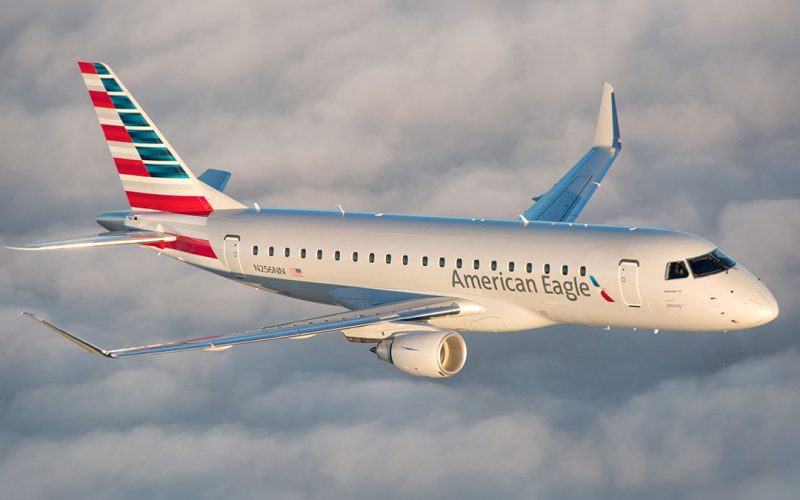
American Airlines and eFuels developer Infinium have completed the first delivery of electro sustainable aviation fuel (eSAF) to a US commercial airport for use on a passenger flight, marking a notable milestone in aviation decarbonisation.
The eSAF was allocated to an American Airlines flight departing Corpus Christi International Airport (CRP) and landing at Dallas Fort Worth International Airport (DFW). Produced and blended at Infinium’s Pathfinder facility in Corpus Christi, Texas, the fuel was combined with conventional jet fuel and certified under ASTM International specifications for Jet A, allowing direct use in existing aircraft engines and airport fuel distribution infrastructure without modifications.
Unlike first-generation SAF derived from biological feedstocks, Infinium’s eSAF is produced using captured waste carbon dioxide and renewable electricity. The resulting power-to-liquids fuel can reduce lifecycle greenhouse gas emissions by more than 90% compared with conventional petroleum-based jet fuel.
Robert Schuetzle, Chief Executive Officer of Infinium, noted that adding eSAF to the Pathfinder facility’s output follows the commercial production of eDiesel and eNaphtha since 2023. Robert Isom, Chief Executive Officer of American Airlines, stated that the flight demonstrates how next-generation drop-in fuel technologies can transition from early-stage investment to practical commercial application.
American Airlines holds an offtake agreement for commercial volumes of eSAF from Infinium’s upcoming Project Roadrunner facility, supported by a corporate Scope 3 agreement with Citi. Financed by Breakthrough Energy Catalyst, Brookfield Asset Management, and HSBC, Project Roadrunner is currently under construction and scheduled to begin fuel deliveries in 2027, with an expected annual production capacity exceeding five million gallons.
While global aviation consumes nearly 100 billion gallons of jet fuel annually, sustainable aviation fuel currently accounts for less than 1% of total global supply. Edward Skyler, Head of Enterprise Services and Public Affairs at Citi, highlighted that advancing synthetic eSAF deployment remains critical to scaling low-carbon options across the sector.