






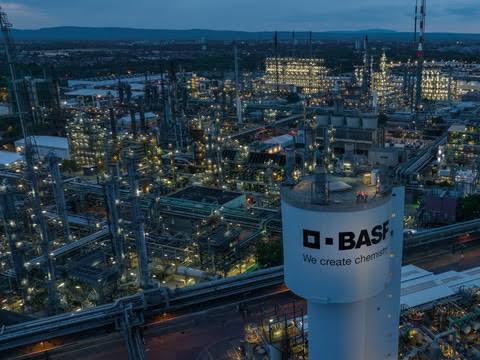
Chemical manufacturer BASF has launched its Engineering Plastics Sustainability Toolbox, a suite of materials, services, and digital solutions designed to help industrial companies lower product carbon footprints and meet evolving regulatory mandates such as the Corporate Sustainability Reporting Directive (CSRD).
A central element of the portfolio is Green Energy Manufacturing, an approach where electricity, steam, and heat from renewable sources—such as electric boilers, heat pumps, biomethane, and process waste heat—replace fossil fuel inputs across chemical production. Designed as a drop-in solution, the process allows customer companies to source lower-carbon thermoplastics without modifying established manufacturing processes or sacrificing material performance. This addresses Scope 3.1 emissions (purchased goods and services), which represent a major decarbonisation hurdle across manufacturing supply chains.
Industrial power management firm Eaton has integrated these reduced-carbon-footprint materials at its manufacturing site in Schrems, Austria, to lower the carbon intensity of its high-volume electrical components. Riccardo Di Federico, Product Line Leader for Final Distribution at Eaton, noted that seamless material integration enables the company to accelerate its sustainability targets without compromising safety or manufacturing efficiency.
Similarly, German automotive and technology supplier Robert Bosch GmbH has adopted BASF’s Green Energy Manufacturing materials. For 2026, Bosch expects its procurement of reduced-carbon thermoplastics from BASF to yield a carbon footprint reduction of approximately 1,000 metric tonnes of CO₂ equivalents. Selina Schober, Global Supplier Key Account Manager at Robert Bosch GmbH, highlighted that global access to carbon-reduced materials enhances company competitiveness alongside meeting environmental targets.
BASF reported that corporate adoption of its sustainable Engineering Plastics solutions generated carbon reductions of roughly 2,000 metric tonnes annually in 2025. Alongside green energy manufacturing, the toolbox features mechanical recycling capabilities using high-quality recyclates and mass balance solutions incorporating alternative raw materials at the start of the production chain.