







Datamaran has announced significant structural enhancements to its Core platform, transforming how multinational corporations track and manage non-financial risks. The software upgrade shifts environmental, social, and governance (ESG) materiality from an annual, static exercise into a continuous corporate governance capability.
The launch arrives as global disclosure mandates accelerate. While “Wave 1” companies under the European Union’s Corporate Sustainability Reporting Directive (CSRD) work to fortify their existing data pipelines, a broader cohort of “Wave 2” enterprises is entering scope. These organisations face immediate pressure from regulators and institutional investors to not only declare their non-financial priorities but also defend them with audit-grade evidence.
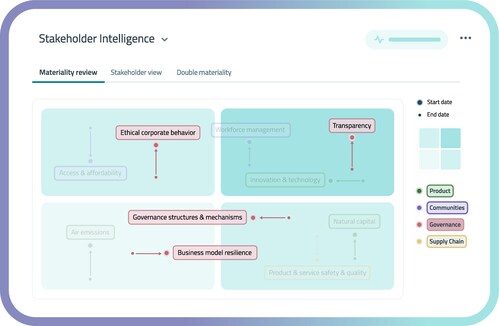
The platform update introduces targeted technical upgrades to Datamaran’s Stakeholder Intelligence and Double Materiality modules, designed to lower compliance costs and eliminate tracking silos:
- External Signal Monitoring: Automatically processes regional regulatory updates, competitor disclosures, and supply chain shifts into real-time operational alerts.
- IRO Industry Landscape: A specialized gap-analysis interface that cross-references a company’s Impacts, Risks, and Opportunities (IROs) against the verified, audited CSRD reports of sector peers to flag reporting omissions or inconsistencies.
- AI-Generated IRO Recommendations: Deploys machine-learning algorithms to suggest custom risk parameters grounded in peer-group disclosures, which corporate sustainability teams can integrate directly into their compliance workflows.
- Dynamic Stakeholder Intelligence Matrix: Maps shifting external priorities against internal business strategies to alert board members of emerging misalignment risks.
“These enhancements give organizations a structured, data-driven way to continuously identify, prioritize, and monitor the risks and opportunities that shape their business,” said Marjella Lecourt-Alma, CEO and Co-Founder of Datamaran. “What’s different in 2026 is that companies want to do this in a more streamlined, cost-effective, and integrated way.”
By aggregating data from 10,000 global corporations, corporate registries across more than 190 jurisdictions, and international media archives, the platform allows internal risk committees to replace expensive third-party consultancies with automated, defensible data.
An internal director at a Fortune 500 financial institution confirmed that migrating to the automated framework yielded immediate financial and operational advantages. “With Datamaran, we have an objective, data-driven process that brings rigor and defensibility to our strategy,” the executive stated. “The platform has delivered nearly 90% efficiency gains and significantly reduced costs, while enabling us to do more analysis, engage more stakeholders, and justify our decisions with clear evidence – something that’s increasingly critical.”
The system upgrade reflects a broader maturation within the compliance software sector, moving away from simple data-collection spreadsheets toward interoperable enterprise risk management (ERM) suites.
“Datamaran Core brings structure, transparency, and continuous intelligence into the process,” added Ian van der Vlugt, VP and Market Leader of Insights & Training at Datamaran. “Whether it’s for enhancing governance and strategy, or for specifically complying with ISSB or CSRD, the platform has you covered.”