







Amazon has publicly disclosed the aggregate water consumption of its global data centre operations for the first time, revealing that its facilities withdrew approximately 2.5 billion gallons (9.5 billion litres) of water in 2025. The company stated that despite the continuous expansion of its global computing infrastructure, water consumption at the sites it owns and operates directly fell by 2 per cent compared to 2024.
According to the corporate disclosure, Amazon Web Services (AWS) recorded a water usage effectiveness (WUE) metric of 0.12 litres of water per kilowatt-hour (L/kWh) in 2025. The company claims this rate makes its data centres more than seven times more water-efficient than the estimated global industry average of 0.84 L/kWh.
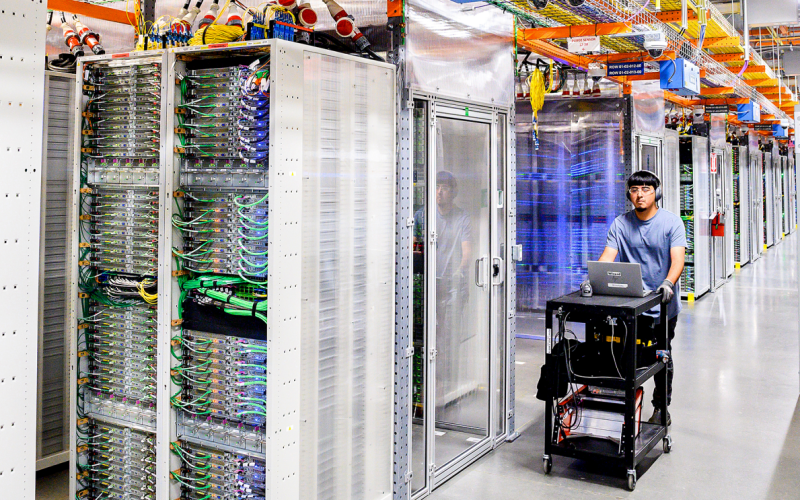
The reduction in water usage follows a multi-year engineering initiative to raise the internal operating temperatures of the company’s servers. By designing hardware capable of tolerating higher thermal limits, engineers reduced the necessary operating hours for water-based cooling mechanisms.
The data centres rely on “free air cooling”—pulling outside ambient air past server racks and venting the heat back outdoors without using water—for approximately 90 per cent of the year. Evaporative cooling systems are activated only when local outside temperatures exceed roughly 30°C (85°F). In Northern Virginia, the company’s largest infrastructure region by IT load, the temperature adjustment triggered a 42 per cent year-on-year reduction in water consumption.
To limit its impact on public municipal drinking water supplies, the cloud provider is shifting its cooling infrastructure toward non-potable sources. Amazon currently operates 26 data centres that run entirely on reclaimed water sourced from municipal wastewater treatment plants, with contracts finalized to expand the system to an additional 130 sites globally.
The company announced that it has achieved 75 per cent of its corporate target to become “water positive” by 2030, a commitment to return more water to regional communities than its direct operations consume. In 2025, the firm replenished three gallons of water for every four gallons it withdrew, supported by the rollout of more than 50 regional water infrastructure, leak detection, and watershed restoration projects worldwide.