








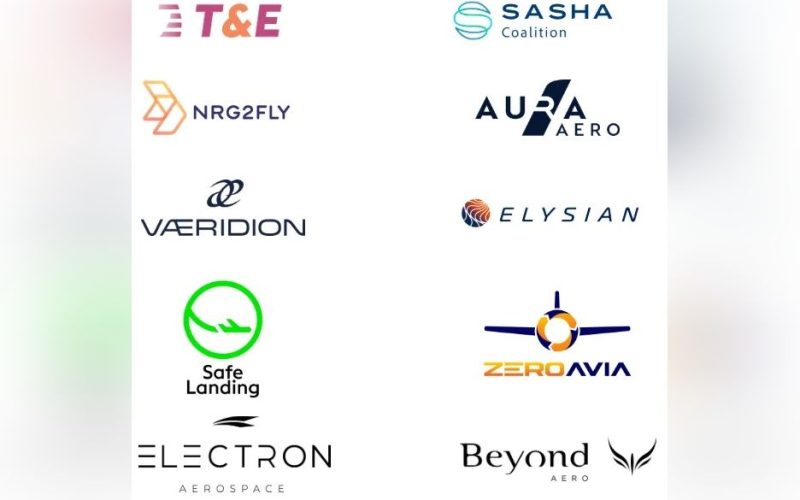
A coalition of European aviation innovators has urged the European Commission and member states to integrate a comprehensive regulatory and financial framework for zero-emission and hybrid-powered aircraft (ZEHA) into the upcoming EU Aviation Strategy.
The group is calling for targeted measures within the next Multiannual Financial Framework (MFF) and relevant aviation legislation to support research and development (R&D), scale up manufacturing, and stimulate market demand for disruptive aircraft architectures.
The proposal recommends that public R&D funding pivot away from incremental upgrades to legacy aircraft technologies, focusing instead on high-risk, high-reward novel propulsion systems. Specifically, the consortium is lobbying for the EU to ringfence a portion of R&D capital under the MFF’s 10th Framework Programme (FP10) for new market entrants whose business models depend on commercialising these technologies.
For the industrialisation phase, the group highlights that backing from the European Competitiveness Fund will be critical to leverage private investment and transition components from laboratories to commercial production. The group also notes that the European Union Aviation Safety Agency (EASA) requires increased administrative resources to certify new hydrogen and electric propulsion technologies safely and without delay.
To stimulate market uptake, the framework outlines specific revisions to current European aviation legislation:
- Slot allocation and ground handling: The European Commission is urged to amend the Slot Regulation to grant green priority within the slot pool to zero-emission and hybrid aircraft at suitable hubs. Concurrently, updates to the Ground Handling Directive should guarantee transparent, fair access to electric charging and hydrogen refuelling infrastructure.
- Environmental charges: The Airport Charges Directive and Air Navigation Charges should be updated to mandate environmental modulation, altering fees based on explicit CO2, nitrogen oxides (NOx) and noise profiles.
- Alternative Fuels Infrastructure Regulation (AFIR): Member states should be required to specify which airports will host electric and hydrogen aircraft within their National Policy Frameworks to facilitate regional grid upgrades.
To offset potential increases in operating costs during the initial years of commercial deployment, the group proposes a dedicated support mechanism. This could be integrated into the ReFuelEU Aviation framework—similar to the electricity credits utilised for electric vehicles under the Renewable Energy Directive—or structured as an extension of the EU Emissions Trading System (ETS) support schemes.
Furthermore, the consortium recommends updating the Air Services Regulation to introduce stricter environmental criteria for Public Service Obligation (PSO) tenders, alongside a progressive cap on the carbon intensity of short-haul flights once zero-emission aircraft enter commercial service.
Finally, the group calls for a stricter application of the polluter-pays principle to aviation fossil fuels, with tax revenues systematically reinvested into the EU Innovation Fund to accelerate the decarbonisation of the sector.