




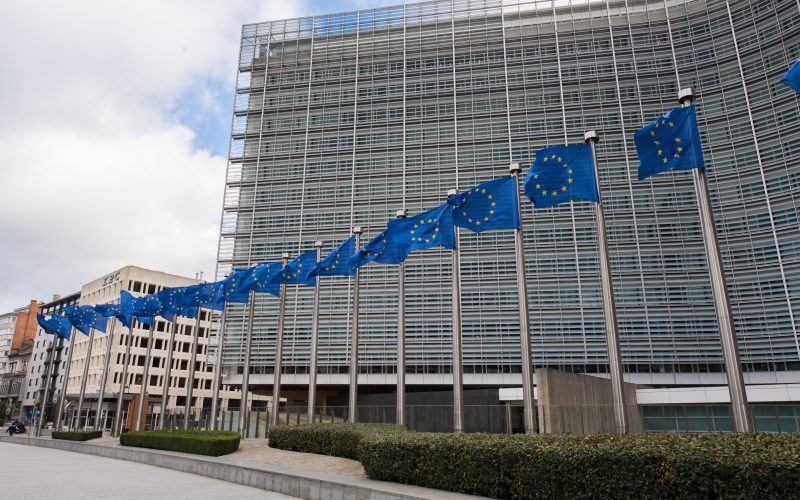
The Council of the European Union has reached an agreement on its negotiating position for a series of targeted measures designed to streamline rules across industrial emissions, the circular economy, and geospatial data sharing.
The legislative package, known as ‘Omnibus VIII’, aims to significantly reduce unnecessary administrative costs and burdens for businesses whilst maintaining the EU’s existing high environmental protection standards. The initiative responds directly to recent high-profile economic reports by Enrico Letta and Mario Draghi, which warned that excessive bureaucracy is undermining European competitiveness.
The simplification package originally targeted six legislative acts. However, following strong reservations from a vast majority of member states, the Council discontinued negotiations on two controversial proposals regarding Extended Producer Responsibility (EPR). Member states opted instead to wait for a comprehensive review of EPR frameworks scheduled under the Circular Economy Act in autumn 2026. Work will continue separately on a Regulation on Speeding up Environmental Assessments (RSEA).
For the remaining proposals approved by the Council, the main regulatory changes include:
Batteries and industrial reporting
The agreed text amends the Batteries Regulation to cut redundant reporting and simplify the removability and replaceability requirements for light means of transport (LMT) battery packs. To give manufacturers breathing space, a targeted 18-month postponement was introduced for certain product categories. Furthermore, reporting requirements for livestock and aquaculture operators under the Industrial Emissions Portal Regulation (IEPR) have been streamlined.
Waste and chemical tracking
The proposal alleviates administrative burdens under waste legislation. While a chemicals inventory remains mandatory for monitoring hazardous substances under the Industrial Emissions Directive, operators will now be permitted to reference existing inventories developed under national or international frameworks rather than compiling entirely new data sets. A clear compliance deadline of July 2030 has been set for the Environmental Management System (EMS).
Modernising spatial data (INSPIRE)
To reflect technological leaps since the original INSPIRE directive took effect in 2007, the Council has updated the framework to align with current EU data legislation. The changes streamline data-sharing technical requirements to ensure the accessibility and quality of environmental spatial data, whilst explicitly clarifying a member state’s right to restrict public access to data on national security grounds.
The upcoming Irish presidency will lead the next stage of the process, entering into negotiations with the European Parliament to finalise the package. Under the ‘One Europe, One Market’ roadmap signed by EU leaders in April 2026, all ten planned simplification packages are slated for final conclusion by the end of 2027.