






Google has announced a five-pillar water stewardship framework alongside $17 million in direct project funding to mitigate the hydrologic footprint of its expanding global data centre network. While water-based thermal management reduces data centre energy consumption by approximately 10 per cent compared to standard air cooling, rising infrastructure growth has placed increased scrutiny on localised watershed extraction. The new framework formalises specific operational rules and infrastructure investments to shift data centre management away from unmitigated freshwater consumption.
Under the core architecture of these commitments, Google has pledged to achieve net-positive replenishment by 2030, aiming to return more water to local ecosystems than its facilities consume. The company offset over 7 billion gallons in 2025, and its current portfolio of 165 stewardship projects across 97 watersheds is projected to return more than 19 billion gallons annually by 2030. To support the municipal networks serving its facilities, Google has also allocated more than USD 500 million to date toward upgrading public water, wastewater, and recycling infrastructure, funding municipal initiatives that range from automated leak detection to expanding local water supplies.
The strategy also establishes strict operational triggers for new data centre developments. Google will utilise a data-driven environmental assessment framework to gauge watershed health prior to breaking ground. If a target region’s water supply is classified as high-risk, the company will mandate the use of air-cooled systems or recycled water rather than fresh supplies. Additionally, the technology firm is expanding contracts with utility partners to transition existing data centres to non-potable options, such as reclaimed wastewater, whilst maintaining its policy of publishing site-specific annual water consumption metrics to ensure transparency.
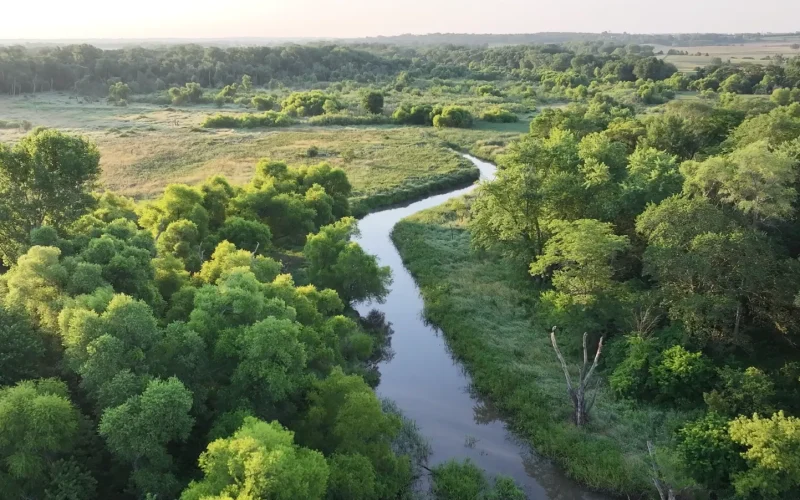
The concurrent $17 million capital deployment targets localised conservation and utility efficiency across seven US states. In Nebraska, funding will back the Metropolitan Utilities District’s leak detection programme in Omaha, while in Texas, capital will flow to the Texas Water Impact Fund to improve community water access. The remaining grants fund nature-based solutions to improve water quality and watershed health, including wetland enhancements with Ducks Unlimited in Georgia, a 5,000-acre agricultural perennial conversion project in Iowa, stormwater green infrastructure in Michigan, and substantial floodplain and wetland restoration projects along rivers in Minnesota and Missouri.
To secure additional volume toward its 2030 net-positive target, Google is currently reviewing more than 700 project proposals submitted through a recent Request for Information (RFI). The submissions encompass nature-based hydrologic solutions, industrial efficiency systems, and agricultural water-reduction practices. Contract selections and implementation schedules for these verified replenishment projects are expected to be finalised over the coming months.