





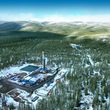

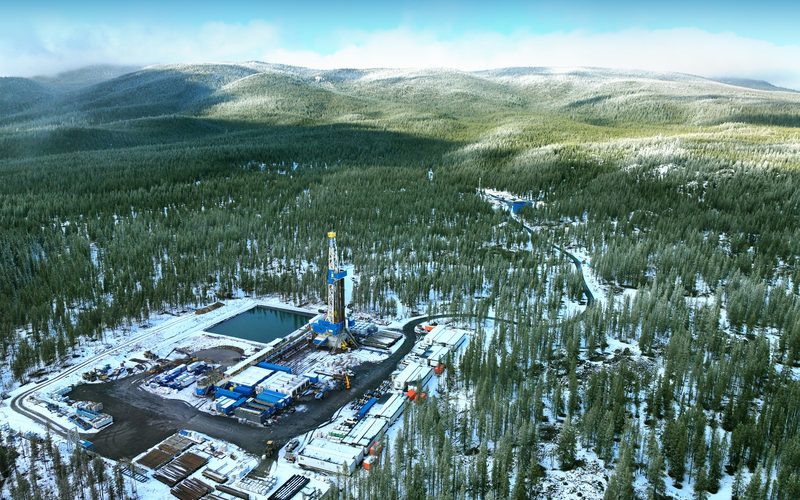
Superhot geothermal developer Quaise Energy has announced that Google has signed a power purchase agreement (PPA) to procure 50 megawatts (MW) of continuous, carbon-free electricity from Project Obsidian, Quaise’s flagship development in Central Oregon, with deliveries slated to begin as early as 2030.
Once operational, the baseload clean energy will support Google’s data centre operations in The Dalles, Oregon, as well as the surrounding regional grid. Unlike conventional geothermal power—which relies on naturally occurring hydrothermal reservoirs rarely exceeding 400°F—Quaise develops Enhanced Geothermal Systems (EGS) targeting superhot subsurface rock formations capable of generating up to ten times more clean electricity per well.
Project Obsidian will advance in two stages. Its initial commercial phase will utilise conventional drilling methods to tap superhot geothermal conditions, while its second phase is expected to mark the world’s first commercial deployment of millimetre-wave drilling technology—a system engineered to retrofit onto existing drilling rigs to vaporise deep basement rock and access superhot heat globally. The agreement follows Quaise’s $180 million Series B financing round closed in August 2026, which included a $35 million investment from Nabors Industries.
Carlos Araque, Chief Executive Officer and President of Quaise Energy, stated that the agreement establishes a commercial foundation for superhot geothermal energy and reinforces US leadership in next-generation geothermal power.
Lucia Tian, Head of Advanced Energy Technologies at Google, noted that the partnership builds on Google’s long-term presence in Oregon—where its three data centre campuses have already reached 83 per cent carbon-free energy—and will help foster local economic growth while building a more resilient, affordable energy system for the state.
The agreement expands Google’s global clean energy portfolio, which encompasses over 240 agreements representing nearly 35 gigawatts (GW) of new clean power capacity signed between 2010 and 2025, including more than 29 GW across 148 projects in North America.
In Central Oregon, Project Obsidian is projected to support between 200 and 400 construction roles and more than 50 permanent engineering and operational jobs, alongside grid reliability upgrades and local electricity royalties.