







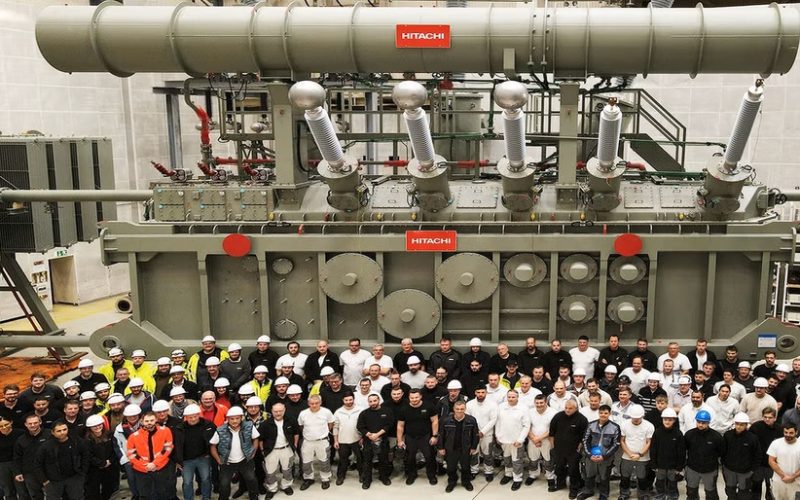
Hitachi Energy has delivered the first 380 megavolt-ampere (MVA) power transformer manufactured with low-carbon copper to a substation in Hardebek, near Hamburg. The delivery is part of a landmark 2023 framework agreement with TenneT Germany, the country’s largest transmission system operator (TSO), which specifies that all units under the contract must utilise low-carbon copper conductors.
The use of low-carbon copper reduces the embedded carbon emissions in transformer materials by 18 percent. Over the course of the framework agreement, the transition to this sustainable material is expected to save TenneT approximately 9,500 metric tons of carbon emissions—an environmental impact equivalent to the annual output of 24 megawatts (MW) of installed wind capacity.
As TSOs successfully lower their Scope 2 emissions through renewable energy procurement, the focus has shifted toward Scope 3 emissions—indirect emissions found within the value chain and procured capital goods.
“Many of our assets and technical components contain a high share of copper,” said Dr Florian Dotzler, Director of Supply Chain Management at TenneT Germany. “Our ambition is to advance economically viable, cost-efficient solutions that make sustainable materials the new standard.”
The adoption of low-carbon copper reduces the overall environmental impact costs of the transformer’s materials by 60 percent, as measured by TenneT’s Environmental Cost Indicator (ECI) methodology. Copper is a critical component in transformers due to its superior electrical and thermal conductivity, but its traditional mining and processing are notoriously resource-intensive.
Produced at Hitachi Energy’s Bad Honnef factory, the unit represents a practical application of the company’s commitment to decarbonising the transformer supply chain.
“As we strive toward net-zero, it’s important to embrace innovative collaboration and partnerships, and to engage the entire value chain to achieve the scale and pace needed to decarbonize energy systems,” said Norbert Beatrix, Hub Manager Europe for Hitachi Energy’s Transformers Business Unit.
TenneT Germany aims to reduce its carbon emissions by 30 percent by 2030 compared to 2019 levels. By integrating low-carbon materials into core grid infrastructure, the TSO is addressing one of the most significant challenges in modern supply chain management.
Hitachi Energy confirmed it is continuing to collaborate with suppliers to offer circular and low-carbon options across other key material categories, including steel, aluminium, and insulating fluids, to further support global climate targets.