










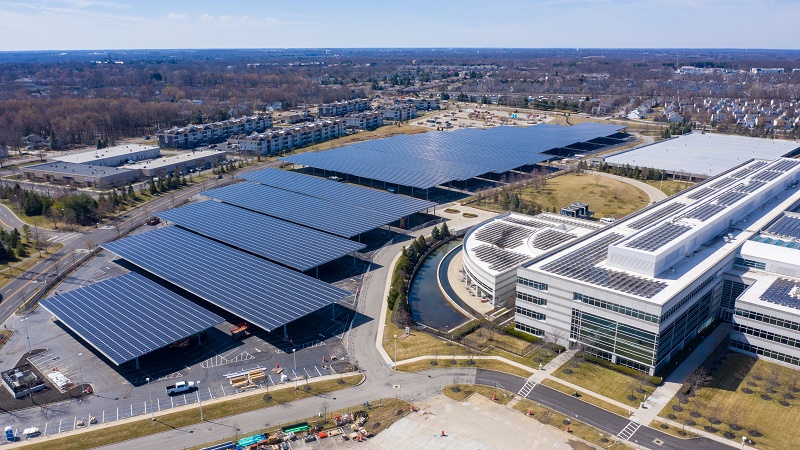
JPMorganChase has announced a major expansion of its sustainable real estate strategy, integrating advanced design and renewable energy across its global portfolio of offices, retail branches, and data centres. The firm, which operates in 66 countries, is leveraging green building certifications and all-electric infrastructure to lower operational costs and reduce its carbon footprint.
A central milestone in this strategy was the October 2025 opening of 270 Park Avenue, Manhattan’s largest all-electric tower and the firm’s new global headquarters. The building is designed to improve air quality and employee well-being while significantly reducing emissions.
“Sustainability and a high-performing workplace can go hand in hand,” the firm stated, noting that over 1 million square feet of its global real estate portfolio achieved green building certifications in 2024 alone.
Since 2020, the bank has matched its global electricity needs with renewable energy through on-site solar and long-term power purchase agreements. A primary example is the Polaris campus in Columbus, Ohio, where nearly 40,000 solar modules—installed on rooftops and as carports—now meet 75% of the building’s electricity requirements.
In recognition of these efforts, JPMorganChase was recently named a recipient of the 2026 WELL People-first Award and the Health-Safety Leadership Award, acknowledging the impact of its building decisions on employee health.
The firm’s retail division, Chase, has also reached significant environmental milestones:
- Zero carbon achievement: In 2025, Chase earned an industry-first multi-site Zero Carbon award for its branches.
- Rapid expansion: The bank opened 160 sustainable branches in 2025, bringing its total to over 250 certified or pending locations.
- Operational savings: These green branches have realised a combined 26% reduction in energy costs since opening.
- Circular design: New branches incorporate responsible materials, including carpets and seating manufactured from recycled ocean plastic.
Beyond its physical walls, the firm is optimising its data centres by migrating to modern, private cloud-based facilities. This consolidation aims to reduce physical server counts, lowering both energy and water consumption.
The bank’s real estate transition has also provided direct community benefits. During the renovation of its 383 Madison Avenue office, the firm donated over $250,000 of kitchen equipment to City Harvest to support food pantries across New York City.
Moving forward, JPMorganChase intends to continue migrating its portfolio toward electric equipment and smarter infrastructure to align its business growth with resource efficiency.