

PepsiCo (NASDAQ: PEP) has announced a strategic collaboration with agricultural technology firm TalusAg to tackle one of the most carbon-intensive segments of the food system: synthetic fertiliser. The agreement marks PepsiCo’s first executed transactions for low-carbon ammonia environmental attributes, representing an initial 30,000 metric tons with an option for a further 41,000 metric tons.
The partnership spans PepsiCo’s operations in Europe, Sub-Saharan Africa, and Asia-Pacific, while also extending to the United States via a proposed project in Blue Earth, Minnesota. By focusing on ammonia—a primary ingredient in fertiliser—the collaboration aims to drive systemic change in a sector that is notoriously difficult to abate.
Fertiliser production is heavily reliant on fossil fuels, with significant emissions occurring far upstream in the supply chain. To address this, PepsiCo and TalusAg are employing a “book-and-claim” model. This allows the environmental benefits of low-carbon ammonia to be tracked and traded separately from the physical product, creating a demand signal for cleaner technology without disrupting local logistics or increasing costs for farmers.
“Decarbonising fertiliser is important to advancing climate progress at scale, but it should be done in a way that works for farmers,” said Margaret Henry, PepsiCo Vice President of Sustainable and Regenerative Agriculture. “This agreement helps create a strong demand signal for low emissions ammonia while supporting both more stable input economics for growers and the long-term transition of the fertiliser market.”
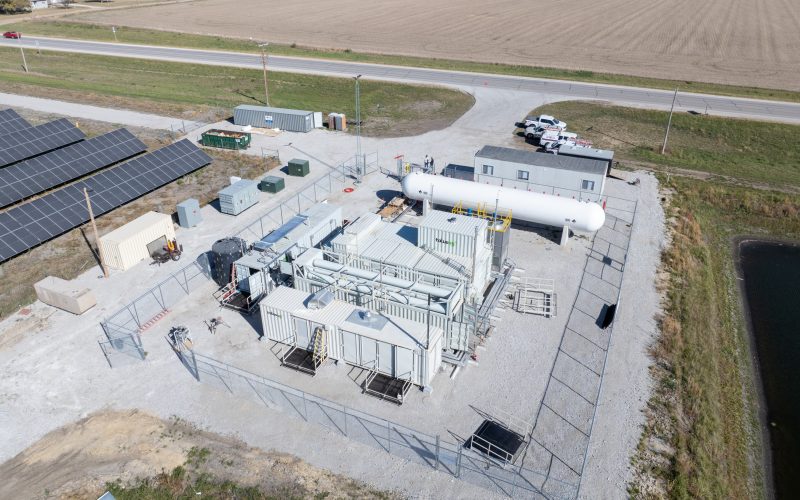
The collaboration will utilise infrastructure provided by S3 Markets to manage the lifecycle of what the companies believe are the world’s first tokenised ammonia fertiliser Environmental Attribute Certificates (EACs). These certificates, sourced from Talus’ project in Boone, Iowa, provide an auditable and secure way to track and retire emissions reductions.
Saman Baghestani, CEO of S3 Markets, noted that this “trusted market infrastructure” allows innovative producers and forward-looking buyers to participate in low-carbon commodity markets with confidence as they develop.
Beyond emissions reductions, TalusAg’s distributed production model offers a strategic shift away from centralised, global supply chains. By enabling local, on-site generation of ammonia closer to the point of use, the model helps insulate farmers from geopolitical instability, logistics bottlenecks, and price volatility.
“This global collaboration is a prime example of how credible market-based mechanisms can help build supply chain reliability, lower fertiliser costs for local farmers and accelerate investment in low emissions fertiliser production,” said Hiro Iwanaga, CEO of TalusAg.
The initiative aligns with PepsiCo’s broader sustainability goals and represents a dual effort to bolster food system resilience while lowering the overall carbon footprint of global agriculture.