







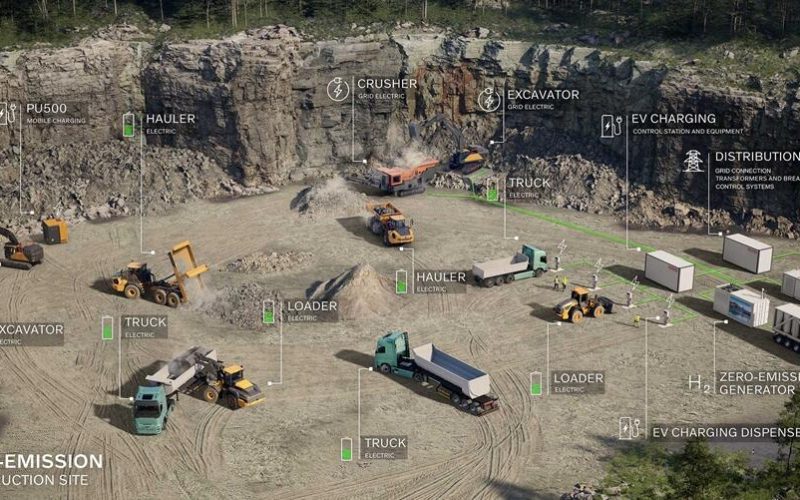
Volvo Construction Equipment (Volvo CE) and Hitachi Energy have signed a non-exclusive Memorandum of Understanding (MoU) to develop integrated, end-to-end solutions aimed at accelerating the deployment of zero-emission construction sites.
The collaboration addresses one of the construction sector’s most persistent decarbonisation challenges: transitioning from isolated electric machinery to fully functioning, zero-emission jobsites. Rather than focusing on standalone technologies, the partnership will evaluate system-level requirements, encompassing power supply infrastructure, charging solutions, on-site energy management, and operational integration.
The initiative responds to tightening regulatory frameworks and growing investor demand for improved environmental performance throughout the project planning and permitting process. To make electric machinery a practical reality on-site, the companies will form joint teams to assess technical and commercial concepts, including new business models, go-to-market strategies, and aftermarket support.
The initial phase of the agreement will focus on practical, plug-and-play approaches designed to simplify the transition for contractors. Over the longer term, the framework establishes a foundation to explore advanced technical capabilities, such as digitally connected machinery and expanded grid-integration services.
Melker Jernberg, President of Volvo CE, highlighted the necessity of industrial cooperation, stating: “Strategic partnerships such as this with Hitachi Energy are key to accelerating the transition to zero-emission construction. By combining complementary expertise and delivering a complete, integrated solution, we are giving customers the confidence, security, and peace of mind they need to adopt emission-free operations today.”
Niklas Persson, Managing Director of Grid Integration at Hitachi Energy, emphasised the shift toward complex, system-level deployment, adding: “Electrification is a game changer in the decarbonization puzzle, particularly for hard‑to‑abate environments such as construction sites. As construction operations become more electric and more complex, success depends less on individual technologies and more on system‑level integration, strong execution, and close collaboration with partners like Volvo CE who share our ambition to enable zero‑emission construction at scale.”