






BBVA has announced a new 2026–2030 Global Eco-efficiency Plan, setting a more rigorous roadmap to eliminate the environmental footprint of its direct operations. The announcement comes as the bank reveals it has already slashed its Scope 1 and 2 CO2 emissions by 83% since 2019, successfully operating on 99% renewable electricity as of 2025.
The new strategy builds on the success of the previous 2021–2025 plan, which reached all its primary targets two years ahead of schedule. The bank is now aiming for 100% renewable electricity and ensuring that two-thirds of its global facilities hold at least one environmental certification by the end of the decade.
Despite its global scale, BBVA has achieved double-digit reductions across all key environmental indicators since 2019:
- Water Consumption: Down 36% per employee.
- Paper and Waste: Paper use fell by 44%, while net waste was reduced by 33%.
- Energy Efficiency: Total electricity consumption per employee dropped by 22%.
- Certified Space: 62% of the bank’s floor space is now environmentally certified, exceeding its original 45% target.
“We are building on a very strong foundation,” explained Alberto Agustín, Head of Premises and Services at BBVA. “Now, we are taking it a step further and raising our sights to continue reducing consumption and emissions across our entire real estate network.”
To drive these reductions, BBVA has utilised a sophisticated internal carbon pricing mechanism since 2020. The bank currently charges its local departments an internal price of €32 per tonne of $CO_2$ emitted. This cost is allocated directly to departmental budgets—for instance, covering the footprint of business travel—to ensure every team is financially incentivised to reduce emissions. In 2025, the bank retired over 167,000 carbon credits as part of its internal management strategy.
While the bank’s direct operations (Scope 1 and 2) are nearing climate neutrality, the report acknowledges that its financed portfolio (Scope 3) represents approximately 99% of its total carbon footprint.
To address this, BBVA has implemented a sector-specific strategy with intermediate 2030 reduction targets to align its lending portfolio with global decarbonisation pathways. The bank is also tackling other Scope 3 areas, such as employee commuting, by expanding electric vehicle charging infrastructure and corporate shuttle services across its major markets in Spain, Mexico, Türkiye, and Argentina.
The 2026–2030 roadmap rests on five pillars:
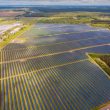
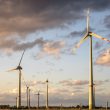
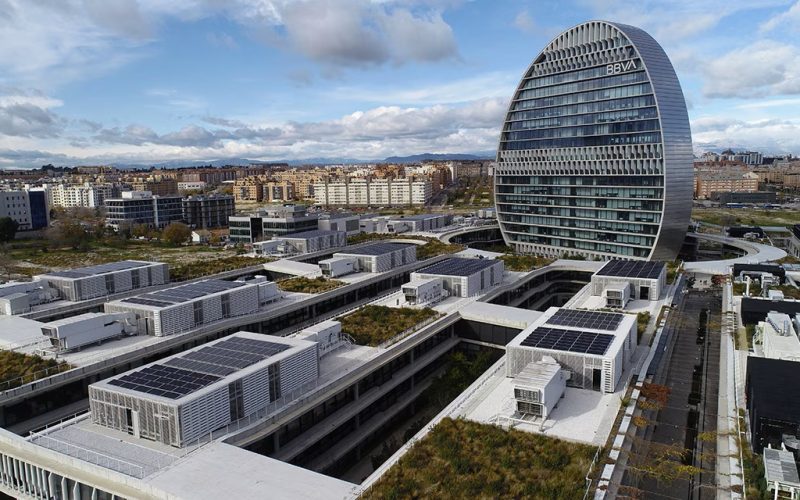
- Renewables: Leveraging Power Purchase Agreements (PPAs) and on-site solar generation.
- Efficiency: Modernising climate control and building management systems.
- Mobility: Transitioning the corporate fleet to low-emission vehicles.
- Resource Management: Enhancing recycling and water recovery.
- Decarbonisation: Targeted reduction of both direct and indirect activity-related emissions.
The plan was developed with input from local teams in every region where the bank operates, ensuring the global targets are achievable within the context of varying local market realities.