








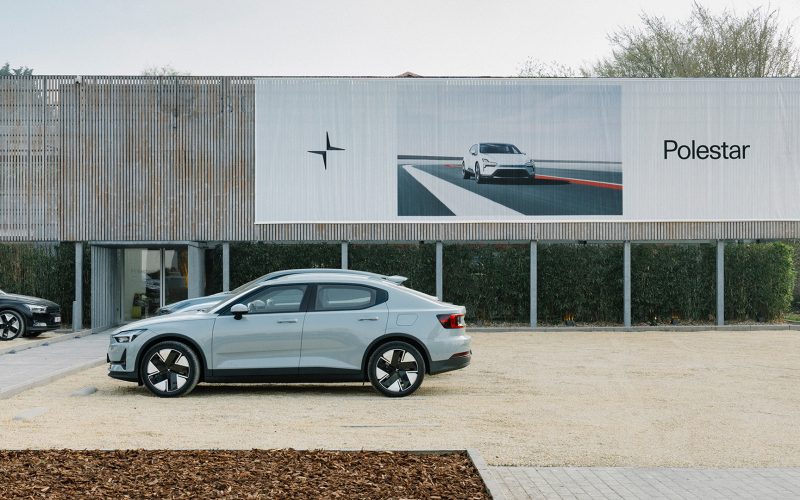
Polestar has released its 2025 Sustainability Report, titled “No Headlines, Just Progress,” revealing that the electric performance car brand has successfully decoupled its rapid commercial growth from its environmental impact. Since its 2020 baseline, the company has reduced greenhouse gas (GHG) emissions per sold car by 30.9%, dropping from 45.9 to 31.7 tonnes of CO2 equivalent (tCO2e).
The report highlights that these gains occurred during a period where annual retail sales increased more than sixfold, reaching over 60,000 cars per year across 28 global markets. In 2025 alone, emissions per car fell by 7% even as sales grew by 34%.
Rather than relying on single, high-profile innovations, Polestar attributed the progress to the consistent application of existing low-carbon technologies across its supply chain. Key drivers in 2025 included:
- Renewable energy: 83% of the aluminium for the Polestar 5 was sourced from smelters powered by renewable electricity.
- Recycled materials: Securing batteries for the Polestar 2 and Polestar 3 that contain at least 50% recycled cobalt.
- Low-carbon supply chain: The use of hydropower-produced aluminium and recycled steel across the model range.
The company’s leadership took a pragmatic tone regarding the report’s findings, suggesting that the industry’s surprise at these figures reflects a lack of action elsewhere.
“If you are not reducing emissions while growing, you are choosing not to. The fact that this still feels worth pointing out says as much about the rest of the industry as it does about us. The solutions behind it should be standard practice by now,” said Michael Lohscheller, CEO of Polestar.
Lohscheller also addressed the shifting consumer landscape, noting that “pump anxiety” caused by volatile fuel prices is becoming a more significant driver for EV adoption than traditional “range anxiety.”
While the brand currently reports one of the lowest climate impacts per vehicle among European manufacturers, Head of Sustainability Fredrika Klarén emphasized that the journey toward the company’s 2040 climate-neutrality goal remains challenging.
“While much of the industry invests in hybrids and combustion engines, we focus on solutions that eliminate emissions entirely. The Polestar 0 project pushes us into new territory,” said Fredrika Klarén, Head of Sustainability.
To support this, Polestar established the “Mission 0 House” in Gothenburg last year—a collaborative research hub where scientists and engineers work on ultra-low-emission steel, bio-based textiles, and technologies to convert CO2 into new materials.