








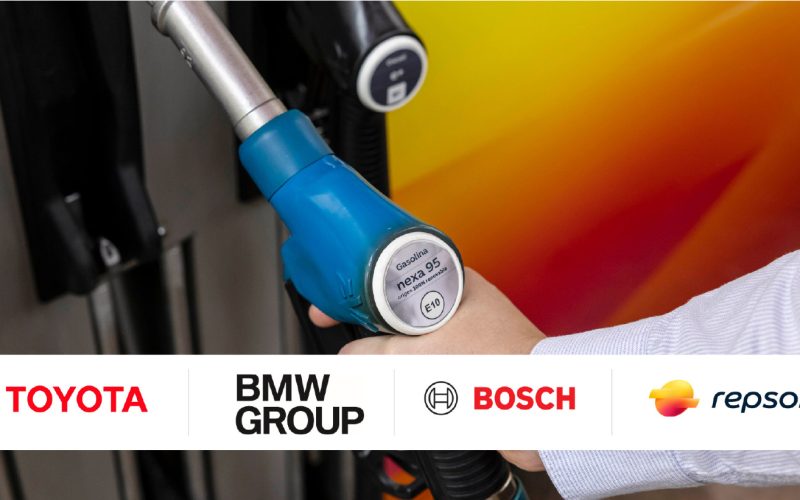
A consortium comprising the BMW Group, Toyota Motor Europe, Bosch, and Repsol has launched a pioneering six-month pilot project in Spain to demonstrate the real-world viability of Vehicles running Exclusively on Eligible Fuels. The initiative, which commenced in early July 2026, aims to provide tangible data showing that such vehicles can be deployed at scale to support Europe’s mobility decarbonisation through a technology-neutral approach.
The project deploys a fleet of approximately 20 Toyota and BMW vehicles powered by Repsol’s Nexa 95, a 100 per cent renewable gasoline. The operational trial is supported by Bosch’s advanced digital fuel tracking technology, the “Digital Fuel Twin”. This software platform cross-references and validates data from vehicle telematics, service stations, and fuel card transactions to certify renewable fuel usage in real-time across the entire value chain.
The demonstration focuses on utilizing existing vehicle technologies and distribution infrastructure, highlighting the immediate scalability of renewable gasoline as a drop-in solution for road transport. Repsol’s Nexa 95 is produced from feedstocks compliant with the EU Renewable Energy Directive, offering significant greenhouse gas reductions while remaining fully compatible with standard gasoline engines. Spain was chosen for the trial because Repsol is currently the only energy provider supplying 100 per cent renewable gasoline at public service stations in the country.
Dr Stefan Heller, Head of Development of the VEEF programme at the BMW Group, stated that technological openness is a core pillar of the company’s strategy to place more efficient vehicles on the road, noting that the data gathered will help optimize global powertrain offerings.
Dr Marko Babic, Head of Product Area at Bosch, added that the digital transparency provided by their tracking system builds the foundation of trust and regulatory compliance required for wider acceptance of renewable fuels.
The findings from the six-month trial will be shared with EU policymakers and industry stakeholders to inform ongoing legislative discussions. While current European policy is heavily focused on electrification, the consortium aims to demonstrate that renewable fuels can play a vital, complementary role in reducing emissions, particularly if the transition to zero-emission vehicles by 2035 faces adoption delays.
Pascal Ruch, Vice President of Corporate and Governmental Affairs at Toyota Motor Europe, and Estíbaliz Pombo, Deputy Director of Energy Products at Repsol, both emphasized that a technology-neutral approach expands consumer choice and helps bridge the carbon-neutrality gap for both new and existing vehicles using the current infrastructure.